Article
When Were Dogs Domesticated? How Wolves Became Our Oldest Friends
A sick Ice Age puppy, disputed skulls and a cancer from a lost lineage: what genetics and archaeology say about when and where wolves turned into dogs.
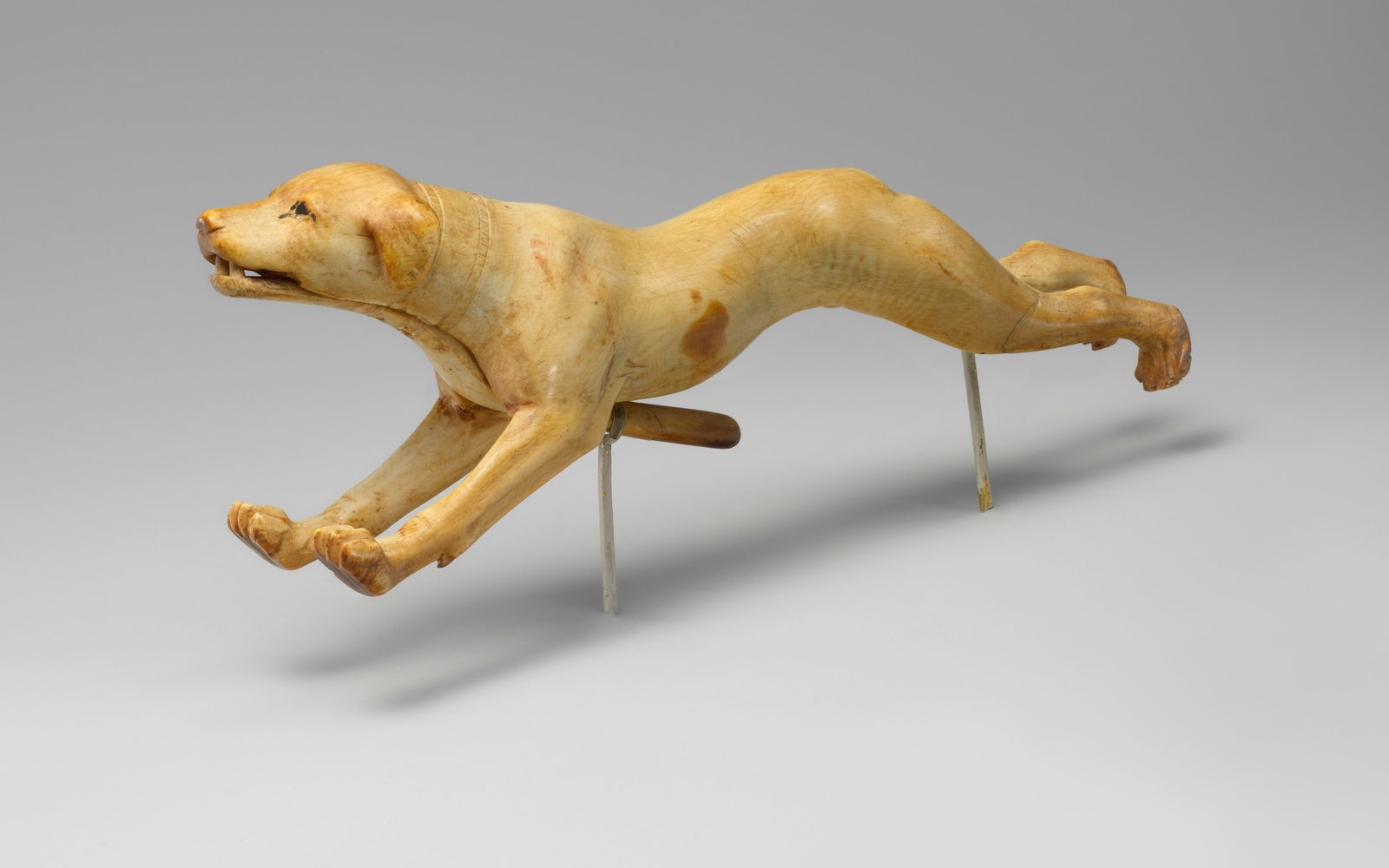

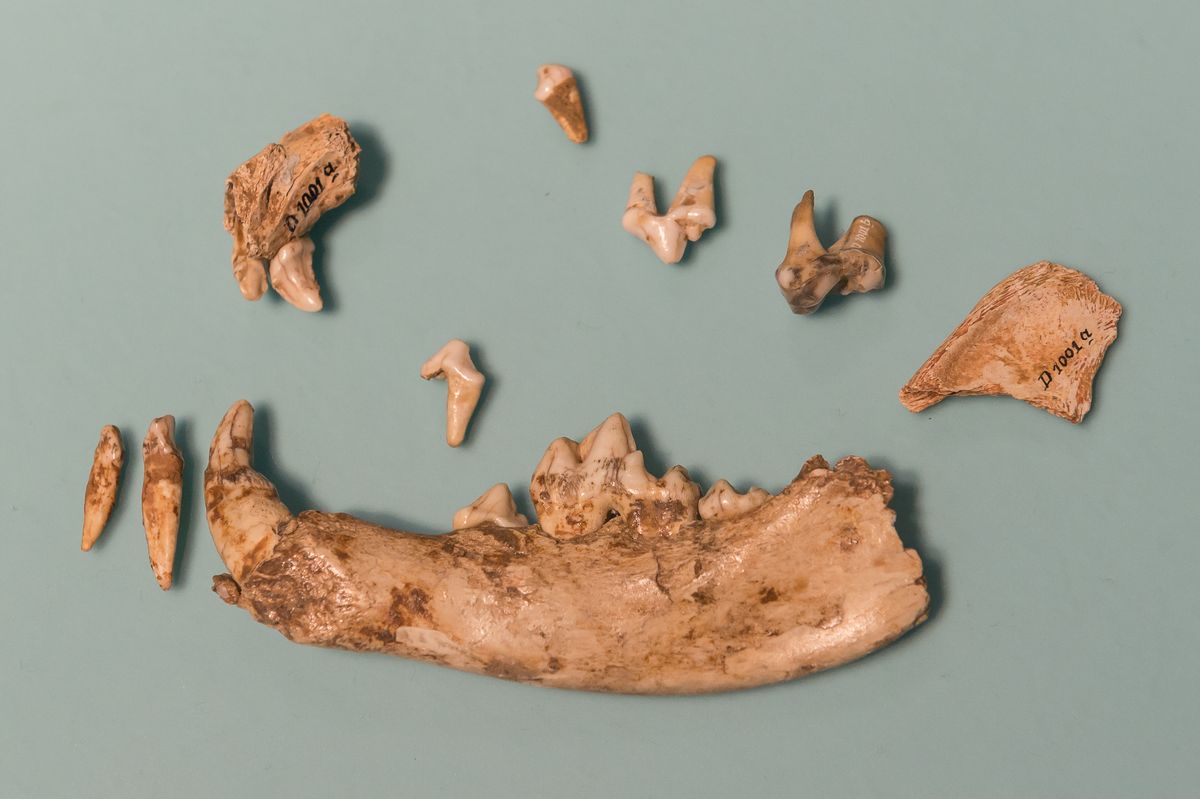
In 1914, quarry workers digging basalt at Oberkassel, now a suburb of Bonn in Germany, broke into a grave. Inside were the skeletons of an older man and a younger woman, decorated objects of antler, bone and teeth, and a dog [1][2].
It was a puppy, about 27 or 28 weeks old when it died [1]. A century later, Luc Janssens, a vet who is also an archaeologist, looked closely at its teeth and found lesions that he and his colleagues read as the scars of canine distemper, which seems to have struck at about 19 weeks and returned at 21 and 23 weeks [1]. “Without adequate care,” Janssens told Leiden University, “a dog with a serious case of distemper will die in less than three weeks” [3]. This one lasted much longer. The team concludes that someone kept it warm and clean and fed it, even though a dog that sick “would not have been of any practical use as a working animal” [3]. The diagnosis can’t be confirmed, because the virus’s genetic material hasn’t survived [3]. Still, around 14,000 years ago, when every human on Earth was a hunter-gatherer [4], somebody nursed a puppy through a deadly illness and then buried it with people.

That puppy is the warmest fact in this whole story. Nearly everything else is still an argument.
Not your neighbourhood wolf
Everyone agrees that dogs come from grey wolves [5][6]. Just not the ones alive today. A 2020 study of 27 ancient dog genomes found that all dogs share an ancestry distinct from present-day wolves, and that since domestication, very little wolf DNA has flowed into dogs while plenty of dog DNA has flowed into wolves [7]. Dogs, in other words, have been slipping their genes into wolves rather than the other way round.
So which wolves? In 2022, a team led by Anders Bergström analysed 72 ancient wolf genomes spanning the last 100,000 years. Dogs were more closely related to ancient wolves from eastern Eurasia than western ones, but no ancient wolf was a direct match, “meaning that the exact progenitor populations remain to be located” [6]. You’ll often read that the ancestral population is extinct, and a 2021 perspective article says it “appears to be extinct” [5]. The 2022 team says this “is not necessarily the case,” since constant interbreeding among wolves may simply have blurred the family resemblance [6]. Either way, nobody has found it.
Genetic estimates for when the dog and wolf lines split range from 40,000 to 14,000 years ago, and skeletons that can be assigned to the dog lineage appear by 14,000 years ago [6]. A split in the family tree isn’t the same thing as domestication, though, and the long stretch between those dates is where the arguments live.
When and where? Pick a continent
Over the years, geneticists have proposed East Asia, Central Asia, the Middle East, Europe, Siberia, or several of these at once as the birthplace of dogs [6]. That’s a lot of birthplaces for one animal.
In 2016, Laurent Frantz, Greger Larson and colleagues sequenced a 4,800-year-old dog from the Newgrange passage tomb in Ireland, found a deep split between East Asian and western Eurasian dogs, and suggested dogs “may have been domesticated independently” in east and west [8]. “Maybe the reason there hasn’t yet been a consensus about where dogs were domesticated is because everyone has been a little bit right,” Larson said [9]. The 2020 ancient-genome study disagreed, finding the data “consistent with a single origin for dogs,” and its authors were blunt about the map: “the geographical origin of dogs remains unknown” [7]. In 2021, Angela Perri and colleagues proposed Siberia, by about 23,000 years ago, when people and wolves may both have been stuck in the harsh conditions of the Last Glacial Maximum [5]. It’s elegant, but the authors admit the archaeological record there is sparse [5]. The 2022 wolf study then found that early dogs drew on two wolf sources, an eastern one and a western one that contributed to Near Eastern, African and later European dogs, and couldn’t tell whether that meant two domestications or one plus interbreeding [6].
Then came 2026, and two papers in the same issue of Nature. One team recovered genomes from a dog at Pınarbaşı in Türkiye dated to 15,800 years ago and another from Gough’s Cave in England’s Cheddar Gorge dated to 14,300 years ago [10]. The two lived more than 4,000 km apart yet were close relatives [4]. “This suggests that the first dogs were a game changer and spread rapidly across Europe,” Larson said [4]. The second paper found that a 14,200-year-old dog from Kesslerloch in Switzerland shares ancestry with later dogs worldwide, which is “inconsistent with the hypothesis that European Upper Palaeolithic dogs derived wholly from a separate domestication process” [11].
So here’s the honest scorecard. On the genetic evidence, dogs existed by about 15,800 years ago [10]. Domestication probably happened during the last Ice Age, “more than 10,000 years before the appearance of any other domestic plants or animals,” as one of the 2026 authors put it [4]. Where, and whether once or twice, is still open.
Dog or wolf? The skull wars
If you want to watch archaeologists argue, show them an old canid skull. In 2009, Mietje Germonpré and colleagues described a skull from Goyet Cave in Belgium, about 31,700 years old, as “clearly different from the recent wolves” and called it a Palaeolithic dog [12]. In 2012, they identified three short-snouted skulls from Předmostí in the Czech Republic as dogs [13]. One had a piece of bone, probably mammoth, placed in its mouth after death [14]. A dog sent off with a snack is a lovely image.
The critics were not charmed. A 2015 study of skull shape in 3D concluded that Goyet and another candidate were “definitively wolves and not dogs” [15]. The 2026 genomes then put the question to the test. Nuclear DNA from candidates at Goyet, Předmostí and Razboinichya Cave in the Altai Mountains showed they “belonged to now-extinct wolf populations” [10]. Every Předmostí or Goyet bone that did contain dog DNA turned out either to have been deposited much later or to be contaminated with modern dog DNA [11].
There is a caveat, and the Kesslerloch authors make it themselves: genetics “cannot rule out” that these wolves interacted with humans in other ways, “for example, taming” [11]. People may well have kept wolves in the Ice Age. Those wolves just don’t seem to be the ancestors of the dog on your sofa.
Who tamed whom?
There are two classic stories. In one, people actively tamed wolves as hunting partners. In the other, bolder wolves hung around human camps to scavenge and slowly tamed themselves [16]. A 2021 paper by Maria Lahtinen and colleagues doubts both (Ice Age hunters didn’t leave much rubbish, and wild wolves make poor hunting partners) and offers a third idea. Humans can get only about 20 percent of their energy from protein, while wolves can live on lean meat for months, so in a hard winter hunters may have had spare protein to share with a captive wolf [16].
The famous test of what breeding for friendliness alone can do is the Russian fox experiment. Since 1960, scientists in Novosibirsk have bred silver foxes for tameness, starting with 130 foxes from Soviet fur farms under the geneticist Dmitry Belyaev [17]. By the fourth generation some pups wagged their tails at people, by the sixth some were whining and licking “in a dog-like manner,” and piebald coats and floppy ears followed [18]. Hold the applause, though. In a paper published in late 2019, Kathryn Lord, Elinor Karlsson and colleagues argued the foxes were never truly wild: their ancestors came from Canadian fur farms on Prince Edward Island, bred since at least the 1880s [17]. They concluded the experiment’s lessons have been “overstated” [19]. Lyudmila Trut, who has worked on the project from the start, calls that “a misguided contention, to say the least” [17]. The foxes are a vivid illustration, not proof of how dogs began.
Wherever people went, dogs went too
Dogs soon travelled with people almost everywhere. American dogs weren’t domesticated from American wolves; they came, probably from Siberia, alongside people, and the earliest confirmed North American dog remains, from Koster in Illinois, are about 9,900 years old [20]. Exactly when they arrived is another dispute. Perri’s team thinks dogs came with the first people, before 15,000 years ago [5], while a 2018 study noted a gap of about 6,000 years between the first people and the first dogs and suggested dogs “may not have arrived into the Americas alongside the first human migration” [20].
That story ends strangely. After Europeans arrived, the native dogs of the Americas almost completely vanished. Their closest living relative is a contagious cancer, the canine transmissible venereal tumour, which spreads between dogs and still carries the genome of the single dog it came from, which “lived up to 8,000 years ago” [20]. A little old American ancestry survives, about 4 percent, in the Chihuahua [7].
In the Arctic, a dog from about 9,500 years ago on Siberia’s Zhokhov Island, found with evidence of sled technology, shows a “noteworthy genetic similarity” to modern sled dogs [21], the deep background to our Husky vs Malamute story. Dogs even crossed the sea. The dingo is the only placental land mammal, apart from murid rodents and bats, to reach Australia before Europeans, and dated dingo bones from Madura Cave put it there between 3,348 and 3,081 years ago [22]. In the New Guinea highlands, wild dogs living above 4,000 metres turned out to be so close to the captive singing dogs, famous for calls “unlike any other canid population,” that the study’s title calls them “the original New Guinea singing dogs” [23].
Pass the porridge
Farming changed dogs, too. A 2013 genome comparison found signs of selection in dog genes for starch digestion, including AMY2B, which makes pancreatic amylase [24]. In a 2016 survey, 49 of 51 wolves carried two copies of AMY2B, while dogs had a median of 10 and up to 22, a pattern that roughly tracks the spread of prehistoric farming [25]. The 2013 authors called the shift “a crucial step in the early domestication of dogs” [24], but ancient DNA later showed that high copy numbers didn’t become widespread until “several thousand years after the first appearance of starch-rich agricultural lifestyles” [7]. The porridge probably came after the friendship.
Partners in the hunt, maybe
The obvious guess is that early dogs earned their keep hunting. “Dogs help hunters find prey faster and more often,” the anthropologist Pat Shipman argued, proposing that dogs help explain huge Ice Age piles of mammoth bones [14]. But her case leaned on Germonpré’s Palaeolithic dogs, now in doubt [10][11], and Karen Lupo’s review of hunting with dogs today found their impact “is highly variable and often restricted to specific prey types” [26]. The 2026 finds hint at other roles: chemical traces show the Pınarbaşı dogs ate fish, suggesting people were feeding them [10], and Frantz suggests “one possibility is that they acted as a highly efficient alarm system” [4]. As for the famous nose, part of it may be a wolf inheritance. The 2022 wolf study found that three regions under selection in Ice Age wolves overlap olfactory receptor genes, and in one, variants rose from close to 0 to 100 percent between 45,000 and 25,000 years ago. Most of the selection episodes it detected happened before dogs split off, and dogs share the selected variants [6].
The look
Anyone who has shared a sofa with a dog knows “the look.” In 2015, Miho Nagasawa, Takefumi Kikusui and colleagues put 28 dogs in a room with their owners for half an hour. Nine fell into long mutual gazes, and both those dogs and their owners showed oxytocin surges. Five hand-raised wolves never held their owners’ gaze [27]. The authors proposed a gaze and oxytocin loop that “may have supported the coevolution of human-dog bonding” [28]. Others were cautious. Zsófia Virányi of the University of Vienna noted that the dogs and wolves hadn’t been socialised in comparable ways [27], and a published commentary called the evolutionary conclusion “premature” [29].
Then there are the eyebrows. In 2019, Juliane Kaminski and colleagues dissected four wolves and six dogs and found that a muscle that raises the inner eyebrow, the levator anguli oculi medialis, was present in the dogs but reduced to scant fibres in the wolves [30]. (A second muscle, which pulls the outer eyelid corners toward the ears, was in every dog except the Siberian Husky [30].) The movement makes eyes look larger and more infant-like, and shelter dogs that do it more are rehomed faster [30]. The twist came in 2024, when a team found a well-developed version of the same muscle in coyotes, suggesting it may be an ancient trait that grey wolves lost [31]. Puppy-dog eyes may not have been invented by dogs at all.
Then the Victorians happened
For most of this history there were kinds of dogs (three sizes are recorded at the 8,000-year-old Danish site of Svaerdborg), but breeding to strict standards within closed bloodlines “only emerged in the 19th century” [32]. Historians trace the modern dog show to a competition for sporting dogs held in Newcastle upon Tyne in June 1859 [33]. By 1862 a “Monster Dog Show” in Islington drew more than 1,000 entries and more than 60,000 visitors, and in 1875 Everett Millais, eldest son of the Pre-Raphaelite painter John Everett Millais, showed the first Basset Hound at a British show [33]. It was “not until Victorian times that breeders started to produce discrete, differentiated, standardized breeds” [34].
Some supposedly ancient breeds are restorations. After the Irish Wolfhound type all but died out by 1840, it was revived (or recreated) by breeding a possible wolfhound to Scottish Deerhounds, then adding Borzois and Great Danes [32]. The World Wars cut English Mastiffs (see our Mastiff page) to 14 individuals in the United Kingdom [32]. And today’s Shiba Inu combines three Japanese lineages after nearly vanishing in the Second World War [32]. (There’s more in our Japanese dog breeds article.) Next to a story at least 15,800 years old, even the oldest dog show is less than two centuries old.
Back to the puppy
So when were dogs domesticated? Probably in the last Ice Age, and definitely by 15,800 years ago [10]. Where? Nobody knows yet [6][7]. Who tamed whom? Still argued. But mitochondrial DNA places the Oberkassel puppy in the same early group of dogs found from England to Türkiye, a population whose ancestry lives on in modern breeds [10]. Fourteen thousand years ago, someone nursed it through weeks of illness when it was of no use to anyone. Whatever dogs were for at the start, they were already loved.
Sources
- Luc Janssens, Liane Giemsch, Ralf Schmitz, Martin Street, Stefan Van Dongen and Philippe Crombé, "A new look at an old dog: Bonn-Oberkassel reconsidered," Journal of Archaeological Science 92 (2018): 126-138. Author version, University of Antwerp repository repository.uantwerpen.be/docman/irua/bb8b58/148364_2021_02_07.pdf · DOI: doi.org/10.1016/j.jas.2018.01.004
- Mary Bates, "Prehistoric Puppy May Be Earliest Evidence of Pet-Human Bonding," National Geographic, 27 Feb 2018 www.nationalgeographic.com/history/article/ancient-pet-puppy-oberkassel-stone-age-dog
- Leiden University, "Emotional bond between humans and dogs dates back 14,000 years" (Feb 2018) www.universiteitleiden.nl/en/news/2018/02/emotional-bond-between-humans-and-dogs-goes-back-14000-years
- Natural History Museum, London, "World's oldest genetic evidence for domestic dogs identified in Europe and Türkiye" (press release, 25 Mar 2026) www.nhm.ac.uk/press-office/press-releases/world-s-oldest-genetic-evidence-for-domestic-dogs-identified-in-.html
- Angela R. Perri, Tatiana R. Feuerborn, Laurent A. F. Frantz, Greger Larson, Ripan S. Malhi, David J. Meltzer and Kelsey E. Witt, "Dog domestication and the dual dispersal of people and dogs into the Americas," PNAS 118, no. 6 (2021): e2010083118 doi.org/10.1073/pnas.2010083118 · PubMed Central: pmc.ncbi.nlm.nih.gov/articles/PMC8017920/
- Anders Bergström et al., "Grey wolf genomic history reveals a dual ancestry of dogs," Nature 607 (2022): 313-320 www.nature.com/articles/s41586-022-04824-9
- Anders Bergström et al., "Origins and genetic legacy of prehistoric dogs," Science 370 (2020): 557-564 doi.org/10.1126/science.aba9572 · author manuscript: pmc.ncbi.nlm.nih.gov/articles/PMC7116352/
- Laurent A. F. Frantz et al., "Genomic and archaeological evidence suggest a dual origin of domestic dogs," Science 352 (2016): 1228-1231 doi.org/10.1126/science.aaf3161 · author version, University of Liverpool: livrepository.liverpool.ac.uk/3001938/1/Frantz%20et%20al.pdf
- University of Oxford, "Dogs were domesticated not once, but twice... in different parts of the world" (2 Jun 2016) www.ox.ac.uk/news/2016-06-02-dogs-were-domesticated-not-once-twice%E2%80%A6-different-parts-world
- William A. Marsh, Lachie Scarsbrook et al. (senior authors Ian Barnes and Laurent Frantz), "Dogs were widely distributed across western Eurasia during the Palaeolithic," Nature 651 (2026): 995-1003 www.nature.com/articles/s41586-026-10170-x · open full text: pmc.ncbi.nlm.nih.gov/articles/PMC13017512/
- Anders Bergström, Anja Furtwängler et al. (senior author Pontus Skoglund), "Genomic history of early dogs in Europe," Nature 651 (2026): 986-994 www.nature.com/articles/s41586-026-10112-7
- Mietje Germonpré et al., "Fossil dogs and wolves from Palaeolithic sites in Belgium, the Ukraine and Russia: osteometry, ancient DNA and stable isotopes," Journal of Archaeological Science 36 (2009): 473-490 www.sciencedirect.com/science/article/abs/pii/S0305440308002380
- Mietje Germonpré, Martina Lázničková-Galetová and Mikhail V. Sablin, "Palaeolithic dog skulls at the Gravettian Předmostí site, the Czech Republic," Journal of Archaeological Science 39 (2012): 184-202 doi.org/10.1016/j.jas.2011.09.022
- Penn State University, "Domestication of dogs may explain large numbers of dead mammoths" (29 May 2014), on Pat Shipman, "How do you kill 86 mammoths?", Quaternary International www.psu.edu/news/research/story/domestication-dogs-may-explain-large-numbers-dead-mammoths
- Abby Grace Drake, Michael Coquerelle and Guillaume Colombeau, "3D morphometric analysis of fossil canid skulls contradicts the suggested domestication of dogs during the late Paleolithic," Scientific Reports 5 (2015): 8299 www.nature.com/articles/srep08299
- Maria Lahtinen, David Clinnick, Kristiina Mannermaa, J. Sakari Salonen and Suvi Viranta, "Excess protein enabled dog domestication during severe Ice Age winters," Scientific Reports 11 (2021): 7 doi.org/10.1038/s41598-020-78214-4 · PubMed Central: pmc.ncbi.nlm.nih.gov/articles/PMC7790815/
- Science News, "Russian foxes bred for tameness may not be the domestication story we thought" (Dec 2019) www.sciencenews.org/article/russian-foxes-tameness-domestication
- Lyudmila Trut, Irina Oskina and Anastasiya Kharlamova, "Animal evolution during domestication: the domesticated fox as a model," BioEssays 31 (2009): 349-360 pmc.ncbi.nlm.nih.gov/articles/PMC2763232/
- Kathryn A. Lord, Greger Larson, Raymond P. Coppinger and Elinor K. Karlsson, "The History of Farm Foxes Undermines the Animal Domestication Syndrome," Trends in Ecology & Evolution 35 (2020): 125-136 doi.org/10.1016/j.tree.2019.10.011 · abstract: pubmed.ncbi.nlm.nih.gov/31810775/
- Máire Ní Leathlobhair, Angela R. Perri et al., "The evolutionary history of dogs in the Americas," Science 361 (2018): 81-85 doi.org/10.1126/science.aao4776 · author manuscript: pmc.ncbi.nlm.nih.gov/articles/PMC7116273/
- Mikkel-Holger S. Sinding et al., "Arctic-adapted dogs emerged at the Pleistocene-Holocene transition," Science 368 (2020): 1495-1499 doi.org/10.1126/science.aaz8599 · PubMed Central: pmc.ncbi.nlm.nih.gov/articles/PMC7116267/
- Jane Balme, Sue O'Connor and Stewart Fallon, "New dates on dingo bones from Madura Cave provide oldest firm evidence for arrival of the species in Australia," Scientific Reports 8 (2018): 9933 doi.org/10.1038/s41598-018-28324-x
- Suriani Surbakti et al., "New Guinea highland wild dogs are the original New Guinea singing dogs," PNAS 117 (2020): 24369-24376 doi.org/10.1073/pnas.2007242117
- Erik Axelsson et al., "The genomic signature of dog domestication reveals adaptation to a starch-rich diet," Nature 495 (2013): 360-364 doi.org/10.1038/nature11837
- Maja Arendt, Kylie M. Cairns, J. William O. Ballard, Peter Savolainen and Erik Axelsson, "Diet adaptation in dog reflects spread of prehistoric agriculture," Heredity 117 (2016): 301-306 pmc.ncbi.nlm.nih.gov/articles/PMC5061917/
- Karen D. Lupo, "When and where do dogs improve hunting productivity? The empirical record and some implications for early Upper Paleolithic prey acquisition," Journal of Anthropological Archaeology 47 (2017): 139-151 doi.org/10.1016/j.jaa.2017.05.003
- Science News, "Gazing deeply into your dog's eyes unleashes chemical attraction" (Apr 2015) www.sciencenews.org/article/gazing-deeply-your-dogs-eyes-unleashes-chemical-attraction
- Miho Nagasawa, Shouhei Mitsui, Shiori En, Nobuyo Ohtani, Mitsuaki Ohta, Yasuo Sakuma, Tatsushi Onaka, Kazutaka Mogi and Takefumi Kikusui, "Oxytocin-gaze positive loop and the coevolution of human-dog bonds," Science 348 (2015): 333-336 doi.org/10.1126/science.1261022
- Sylvain Fiset and Vickie Plourde, "Commentary: Oxytocin-Gaze Positive Loop and the Coevolution of Human-Dog Bonds," Frontiers in Psychology 6 (2015): 1845 www.frontiersin.org/journals/psychology/articles/10.3389/fpsyg.2015.01845/full
- Juliane Kaminski, Bridget M. Waller, Rui Diogo, Adam Hartstone-Rose and Anne M. Burrows, "Evolution of facial muscle anatomy in dogs," PNAS 116 (2019): 14677-14681 pmc.ncbi.nlm.nih.gov/articles/PMC6642381/
- Patrick Cunningham, Mahita Shankar, Bridgett vonHoldt, Kristin E. Brzeski and Sarah S. Kienle, "Coyotes can do 'puppy dog eyes' too: comparing interspecific variation in Canis facial expression muscles," Royal Society Open Science 11 (2024): 241046 pmc.ncbi.nlm.nih.gov/articles/PMC11444785/
- Greger Larson et al., "Rethinking dog domestication by integrating genetics, archeology, and biogeography," PNAS 109 (2012): 8878-8883 pmc.ncbi.nlm.nih.gov/articles/PMC3384140/
- Neil Pemberton and Michael Worboys, "The invention of the basset hound: breed, blood and the late Victorian dog fancy, 1865-1900," European Review of History 22 (2015): 726-740. University of Manchester repository pure.manchester.ac.uk/ws/portalfiles/portal/67069829/The_invention_of_the_basset_hound_breed_blood_and_the_late_Victorian_dog_fancy_1865_1900.pdf
- Johns Hopkins University Press, Michael Worboys, Julie-Marie Strange and Neil Pemberton, The Invention of the Modern Dog: Breed and Blood in Victorian Britain (2018), publisher's description www.press.jhu.edu/books/title/11997/invention-modern-dog
The Dog Codex is an editorial reference, not veterinary advice. Quotations come from the sources listed above; follow the links for the full context.