Working group · Siberia (Chukchi); U.S.A. per FCI
Siberian Husky
- SizeMedium
- Height50.5 to 60 cm
- Weight15.5 to 28 kg
- GroupWorking
- EnergyHigh
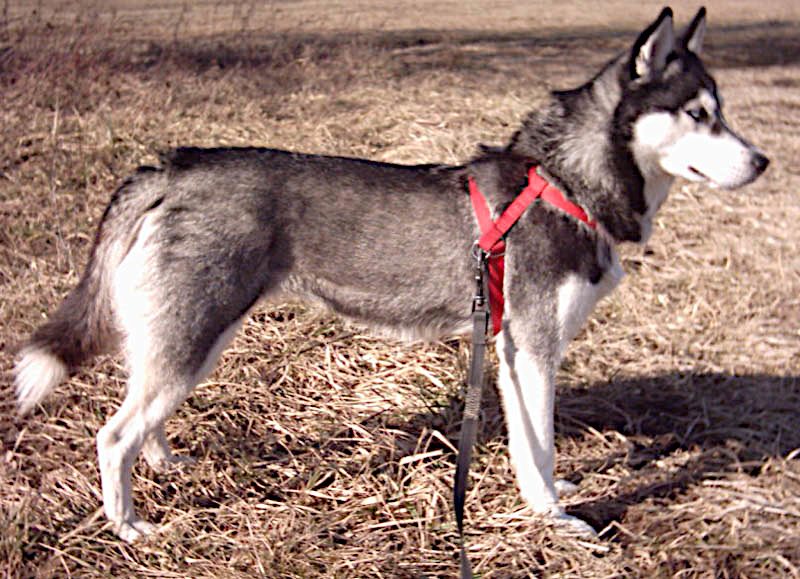
Photo: xJaM, CC BY-SA 3.0, via Wikimedia Commons

Overview
The Siberian Husky is a medium-sized northern sled dog, quick and light on its feet, developed by the Chukchi people of northeastern Asia as an endurance sled dog. Its standard describes a dog built to carry a light load at a moderate speed over great distances, and the breed club notes that it does so on a relatively small amount of food. Friendly, gentle, alert and outgoing, it has a famously strong desire to run.
History
The Chukchi people of northeastern Asia developed these dogs as endurance sled dogs and kept them as family companions. Siberian dogs first reached Nome, Alaska, around the time of the 1909 All Alaska Sweepstakes, a 408-mile race, where locals mocked the small imports as 'Siberian Rats' before they placed third. More imports followed, and a Siberian team won the race in 1910. Leonhard Seppala later trained and raced Siberians, and in the 1925 diphtheria serum relay to Nome his team, led by Togo, crossed Norton Sound in a blizzard. The AKC recognized the breed in 1930, and the Siberian Husky Club of America was founded in 1938. The breed is distinct from the larger Alaskan Malamute and from the cross-bred sled dogs known as Alaskan huskies.
Type
FCI: dogs 53.5 to 60 cm and 20.5 to 28 kg; bitches 50.5 to 56 cm and 15.5 to 23 kg. AKC: dogs 21 to 23½ in and 45 to 60 lb; bitches 20 to 22 in and 35 to 50 lb. Both standards call these the extreme height and weight limits, with no preference for either end, and weight should be in proportion to height. Dogs over 60 cm (23½ in) and bitches over 56 cm (22 in) are disqualified. Any appearance of excessive bone or weight is penalized, and the standards say the Siberian should never look heavy enough to suggest a freighting animal or light enough to suggest a sprint racer.
A double coat of medium length, well furred but never so long that it hides the dog's clean outline. The undercoat is soft and dense, and the guard hairs are straight and somewhat smooth lying. The AKC and FCI standards allow black, gray, agouti, sable, red and white, solid or in multiple shades, with or without white markings, and in a wide variety of symmetrical or asymmetrical patterns, including piebald. Merle and brindle patterns are disqualified. Eyes may be brown or blue, one of each, or parti-colored. The tail is a well-furred fox brush.
Temperament
Both the AKC and FCI standards describe the Siberian as friendly and gentle, but also alert and outgoing, with an expression that is keen, interested and even mischievous. It does not show the possessive qualities of a guard dog, and it is not overly suspicious of strangers or aggressive with other dogs; some reserve and dignity may be expected in a mature dog. The breed club calls the temperament affectionate but not fawning, notes an independent spirit, and warns that predatory instincts are strong, so small animals such as cats, rabbits and birds can be at risk.
Energy
High. The Siberian was developed as an endurance sled dog, and the AKC describes it as an active, athletic dog that needs a lot of exercise and is happiest with a job to do. Work in harness suits its heritage, and AKC sports such as rally, agility and obedience are other outlets. The breed club singles out the Siberian's desire to run as one of its defining traits.
Intelligence
The breed standards credit the Siberian with 'intelligence, tractability, and eager disposition,' making it 'an agreeable companion and willing worker.' The breed club adds that its intelligence has been proven, but its independent spirit may at times challenge your ingenuity.
Intelligence here means typical trainability, guided by Stanley Coren's survey of obedience judges. It is not a verdict on any one dog.
Care
Grooming
The AKC calls the Siberian a 'natural' breed that is remarkably self-cleaning and often needs only a few baths a year. Weekly brushing keeps the coat and skin in good condition. When the undercoat sheds, once or twice a year according to the AKC and the Siberian Husky Club of America, the old coat should be raked out with a pin brush and a metal comb. Keep the nails trimmed. For the show ring, the standards allow only tidying of the whiskers and the fur between the toes and around the feet.
Health notes
The AKC breed page describes Siberians as a generally healthy, relatively long-lived breed. The Siberian Husky Club of America names three inherited eye diseases of current concern: hereditary (juvenile) cataracts, corneal dystrophy, and progressive retinal atrophy, which in Siberians takes an X-linked form (XLPRA). The club also screens for hip dysplasia and for two neurologic diseases identified in the breed, Siberian Husky Polyneuropathy Type 1 (SHPN1) and Shaking Puppy Syndrome Type 1 (SPS1), which have had DNA tests since February 2023. To earn a CHIC number from the Orthopedic Foundation for Animals, a Siberian needs an eye exam by a board-certified (ACVO) veterinary ophthalmologist at 12 months or older, registered with OFA (OFA also accepts the Siberian Husky Ophthalmic Registry, though the club says that registry is currently unavailable), a hip evaluation by OFA or PennHIP, and DNA tests for SHPN1 and SPS1, all registered with OFA, plus a microchip or tattoo. A CHIC number shows that the tests were done and the results made public, not that every result was normal.
Ordinary care
Because of the breed's strong desire to run, both the AKC and the Siberian Husky Club of America advise keeping a Siberian on a leash, in harness, or in a securely fenced area at all times. The club also notes a fondness for digging. The AKC recommends early socialization and basic training, made fun for both dog and handler, and describes Siberians as very social dogs that regularly need the company of their people or other dogs.
Facts
- Seppala's lead dog Togo led his team across the longest and most dangerous stretch of the 1925 serum run to Nome, yet Balto, who ran the final leg, received more of the fame.
- When the first Siberian team arrived in Nome for the 1909 All Alaska Sweepstakes, locals mocked the little dogs as 'Siberian Rats.' The team placed third, and a Siberian team won the race the following year.
- Odd eyes are fully within the rules: the AKC and FCI standards say a Siberian's eyes may be brown or blue, one of each, or parti-colored.
The Dog Codex is an editorial reference, not veterinary advice. Health notes summarize conditions that appear in breed literature; they do not diagnose an individual dog and do not replace examination by a licensed veterinarian.