Article
Japanese Dog Breeds: Six Natural Monuments and a Few Famous Outsiders
Japan protects six of its native dogs the way other countries protect old temples. Here's who they are, what they hunted, and why there are now two kinds of Akita.
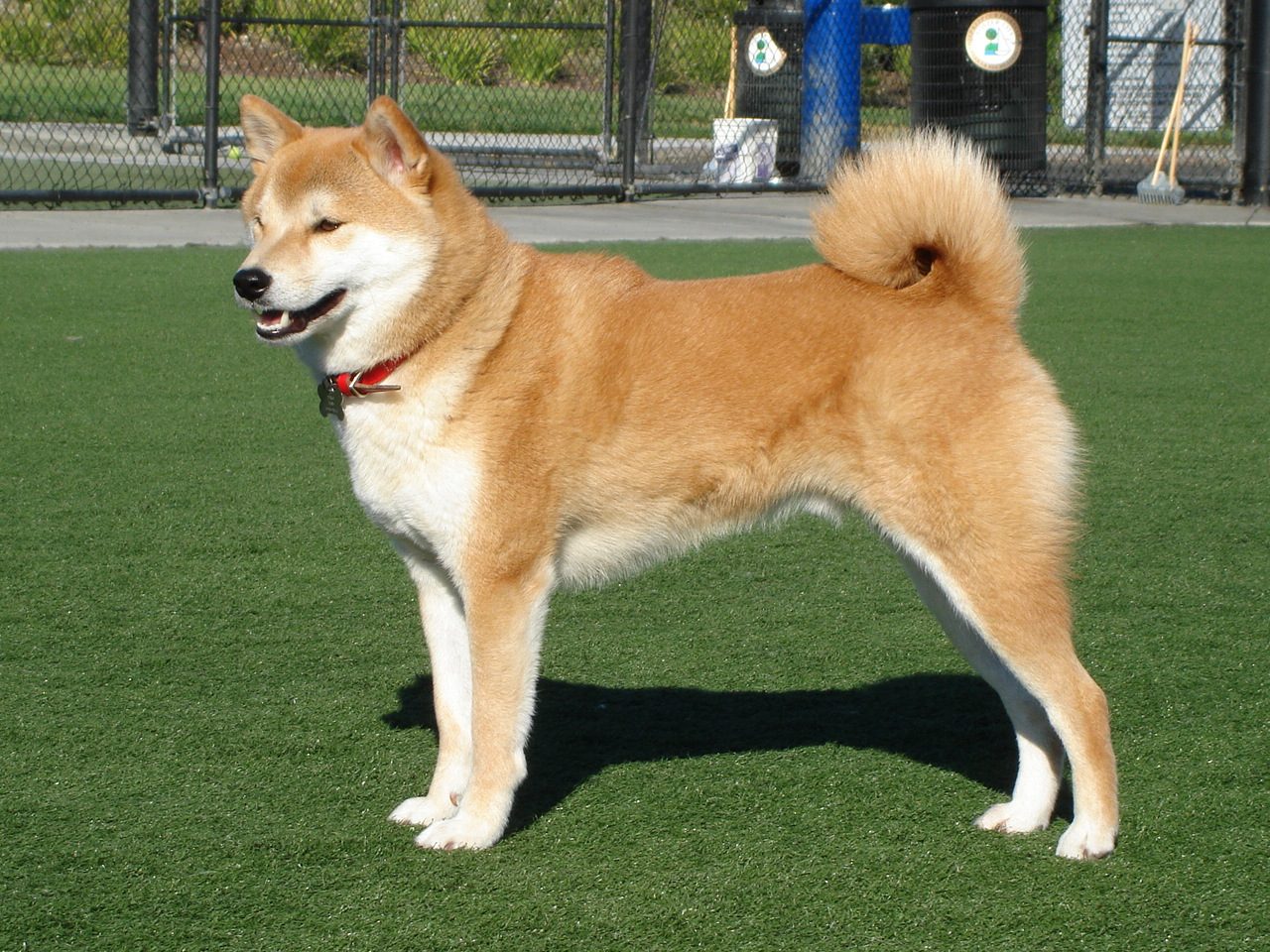

Most countries keep their national treasures in museums. Japan keeps some of them on leads.
In the 1930s, Japan’s Ministry of Education designated six native dog breeds as tennen kinenbutsu, or natural monuments [1]. All six still hold that status, and all six are tracked by the Nihon Ken Hozonkai, the Association for the Preservation of the Japanese Dog, known as NIPPO [1].
NIPPO was founded in 1928, when, by its own account, the old native dogs were close to disappearing [2][8]. The club surveyed local dogs across the country, and in 1934 it published a single Japanese dog standard that sorted the breeds into three sizes [1][8]. There is one small breed, the Shiba. There are four medium breeds: the Kishu, Shikoku, Kai and Hokkaido. And there is one large breed, the Akita [1].
Here they are, roughly in order of when they became monuments.
Six dogs, three sizes
The Akita went first, in 1931 [1]. The FCI standard says that from 1603, in the Akita region of northern Honshu, medium-sized bear-hunting dogs called Akita Matagi were used as fighting dogs [3]. From 1868 they were crossed with Tosas and Mastiffs, which made them bigger but cost them some of their spitz character. After dog fighting was banned in 1908, fanciers kept the breed going, and nine “superior examples” were designated as natural monuments in 1931 [3].
The Kishu and the Kai followed in 1934 [1]. The Kishu comes from the mountain districts of Kishu, which covers today’s Wakayama and Mie Prefectures. It was used for hunting, “now mainly wild boar, but at one time also deer” [4]. Early Kishus came in red, sesame and brindle. After 1934, only solid colours were accepted, and the FCI notes that white coats are now found in the breed [4].
The Kai comes from the Kai district of Yamanashi Prefecture, “which is surrounded by mountains,” and hunted mainly boar and deer [5]. Its calling card is a brindled coat, which gave it the nickname Kai tora-ken, or tiger dog [5]. The FCI adds a nice detail: the breed’s “strong inclination to form a pack is thought to contribute towards maintaining the purity of the breed” [5].
The Shikoku and the Hokkaido became monuments in 1937 [1]. The Shikoku was bred mainly to hunt boar in the mountains of Kochi Prefecture and is sometimes called the Kochi-ken [6]. There were once three varieties, Awa, Hongawa and Hata, each named after its home area. The FCI says the Hongawa stayed the purest “because the breeding area was not easily accessible” [6]. Sometimes a bad road is the best conservation programme there is.
The Hokkaido is said to descend from medium-sized dogs that came north from Honshu with migrants in the Kamakura era [7]. It is also known as the Ainu-ken, because the Ainu, Hokkaido’s earlier inhabitants, bred these dogs “for hunting bears and other animals” [7]. The standard says its build lets it withstand “severe cold and heavy snowfalls” [7].
The little one that almost wasn’t
The Shiba is the smallest of the six and, by a wide margin, the most common. NIPPO says Shibas make up about 80 percent of the Japanese native dogs kept in Japan [8]. It was a hunter of “birds and small animals” in the mountains facing the Sea of Japan [9].
It nearly didn’t make it to the twentieth century intact. The FCI says that after English Setters and Pointers arrived in the Meiji era, hunting became a sport and crossbreeding with the newcomers became so common that by the 1910s and 1920s pure Shibas were “exceedingly scarce” [9]. The preservation effort began in earnest around 1928, and NIPPO records the Shiba’s designation as a natural monument in December 1936 [8].
Then came the war. NIPPO says many Japanese dogs were lost during the Second World War, and that its preservation work largely stopped from before the war’s end until three or four years after it [2]. The AKC puts it more bluntly: “By the end of World War II Shibas were nearly extinct” [10].
The recovery leaned heavily on very few dogs. NIPPO credits a dog called Seki, found in Shimane Prefecture in 1936, and his descendant Naka, whom it calls the founding sire of the breed’s post-war revival. According to NIPPO, if you trace the paternal lines of the roughly 30,000 Shibas it registers each year, they all lead back to Seki [8]. You can read more about the breed on our Shiba Inu page.
Hachikō, and the two Akitas
No Japanese dog is more famous than Hachikō, and he was an Akita. According to the University of Tokyo, Hachi was born in November 1923 in what is now the city of Odate. When he was about 50 days old, he was given to Hidesaburō Ueno, a professor of agriculture at Tokyo Imperial University [11]. Hachi walked Ueno to and from Shibuya Station. On 21 May 1925, Ueno died suddenly on campus. For nearly ten years afterwards, Hachi went to Shibuya Station every morning and evening to look for him [11]. He died in 1935. Statues of him now stand in Shibuya, Odate and elsewhere, and his internal organs are still kept at the university [12].
After the war, the Akita itself split in two. During the war, says the FCI, the police ordered the capture of almost all dogs except German Shepherds used by the military, and some owners crossed their Akitas with German Shepherds to save them [3]. By 1945 the breed had fragmented into three types: hunting, fighting and shepherd-crossed [3].
In Japan, breeders went back to the Matagi-type dogs to restore the original look [3]. But many Akitas of the Dewa line, which showed Mastiff and German Shepherd influence, went to the United States with returning servicemen [13]. The AKC accepted the breed in 1972. At that time it had no pedigree agreement with the Japan Kennel Club, so no new Japanese bloodlines could come in, and the two populations drifted apart [13].
The FCI now treats them as separate breeds. The Akita (standard 255) has Japan as its country of origin. The American Akita (standard 344) also lists Japan as its origin but the United States as its country of development, and it was accepted on a definitive basis in 1999 [14][15]. The standards read like a spot-the-difference puzzle. The Akita comes only in red fawn, sesame, brindle and white, with the pale urajiro shading required except in white dogs, and a black mask is a disqualification [3]. The American Akita may be “any colour,” including pinto, “with or without mask” [13].
The AKC does it differently. Its Akita, in the Working Group since 1972, descends from the American population the FCI describes [13][16]. The Japanese type is listed separately as the Japanese Akitainu, which entered the AKC’s Foundation Stock Service in August 2020 [16][17]. The AKC also notes that Hachikō was “red with urajiro” [17].
Japanese, but not on the list
Two famous breeds developed in Japan sit outside NIPPO’s six.
The Japanese Chin is a toy breed in FCI Group 9 [18]. Its standard says its ancestors are assumed to have reached the Japanese court from Korea around 732, and that it was kept as an indoor toy dog at Edo Castle in the late 1600s [18]. The AKC is more cautious, noting that historians still argue over whether the breed came from China or Korea, but agreeing that Japanese nobles shaped it [19]. The AKC recognised it in 1888, and it was known as the Japanese Spaniel until 1977 [19].
The Tosa is a different animal altogether. The FCI files it with the mastiffs and describes it as “formerly fighting dog, nowadays watchdog” [20]. It was produced from the Shikoku-ken crossed with Western breeds: Bulldogs, Mastiffs, German Pointers and Great Danes, added between 1872 and 1924 [20]. The AKC says it is named after Tosa Province, now Kochi Prefecture [21]. So the Tosa and the Shikoku share a home island and a family tree, but they ended up at opposite ends of the dog world.
Sources
- Nihon Ken Hozonkai (NIPPO), home page, "天然記念物 日本犬の6犬種" (the six Japanese dog breeds designated natural monuments, with designation years) www.nihonken-hozonkai.or.jp/
- NIPPO, "日本犬の歴史" (History of Nihonken) www.nihonken-hozonkai.or.jp/history/
- FCI Standard No. 255, Akita (official valid standard 13 Mar 2001) fci.be/Nomenclature/Standards/255g05-en.pdf
- FCI Standard No. 318, Kishu (official valid standard 30 Oct 2016) fci.be/Nomenclature/Standards/318g05-en.pdf
- FCI Standard No. 317, Kai (official valid standard 30 Oct 2016) fci.be/Nomenclature/Standards/317g05-en.pdf
- FCI Standard No. 319, Shikoku (official valid standard 30 Oct 2016) fci.be/Nomenclature/Standards/319g05-en.pdf
- FCI Standard No. 261, Hokkaido (official valid standard 30 Oct 2016) fci.be/Nomenclature/Standards/261g05-en.pdf
- NIPPO, "柴犬" (Shiba) breed page (1934 standard and size classes; share of Nihonken, 1936 designation, Seki and Naka) www.nihonken-hozonkai.or.jp/shibainu/
- FCI Standard No. 257, Shiba (official valid standard 30 Oct 2016) fci.be/Nomenclature/Standards/257g05-en.pdf
- American Kennel Club, Shiba Inu breed page (history) www.akc.org/dog-breeds/shiba-inu/
- The University of Tokyo, Graduate School of Agricultural and Life Sciences, "東大ハチ公物語" (statue unveiling address) www.en.a.u-tokyo.ac.jp/hachi_ueno_hp/hp/
- The University of Tokyo, "Hachiko and UTokyo (part 1)" (23 Aug 2024) www.u-tokyo.ac.jp/focus/en/features/z1304_00275.html
- FCI Standard No. 344, American Akita (official valid standard 11 Feb 2026; English 24 Apr 2026) fci.be/Nomenclature/Standards/344g05-en.pdf
- FCI nomenclature, American Akita (344) fci.be/en/nomenclature/AMERICAN-AKITA-344.html
- FCI nomenclature, Akita (255) fci.be/en/nomenclature/AKITA-255.html
- American Kennel Club, Akita breed page www.akc.org/dog-breeds/akita/
- American Kennel Club, Japanese Akitainu breed page www.akc.org/dog-breeds/japanese-akitainu/
- FCI Standard No. 206, Chin (Japanese Chin) (official valid standard 4 Apr 2016) fci.be/Nomenclature/Standards/206g09-en.pdf
- American Kennel Club, Japanese Chin breed page www.akc.org/dog-breeds/japanese-chin/
- FCI Standard No. 260, Tosa (official valid standard 9 Dec 1997) fci.be/Nomenclature/Standards/260g02-en.pdf
- American Kennel Club, Tosa breed page www.akc.org/dog-breeds/tosa/
The Dog Codex is an editorial reference, not veterinary advice. Quotations come from the sources listed above; follow the links for the full context.