Toy group · Tibet / China
Shih Tzu
- SizeToy
- Height20–28 cm (AKC)
- Weight4.1–7.3 kg (AKC)
- GroupToy
- EnergyModerate
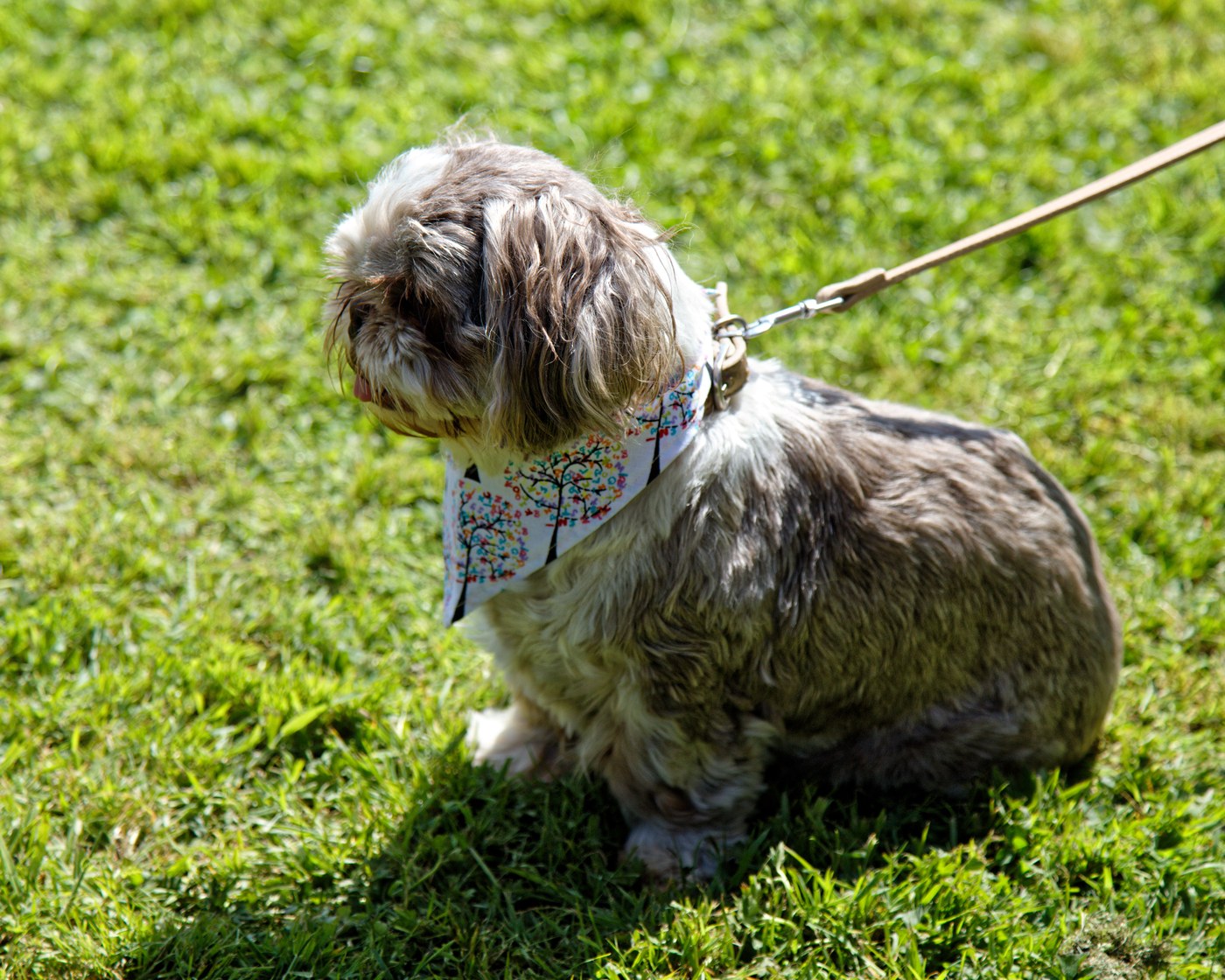
Photo: Acabashi, CC BY-SA 4.0, via Wikimedia Commons

Overview
The Shih Tzu is a sturdy, lively little companion with a long, flowing double coat, a proud, distinctly arrogant carriage, and a heavily plumed tail curved over its back. Its roots are in Tibet, but it was developed in China, where dogs like it lived in the imperial palaces. Hair growing upward on the bridge of the nose gives its face the famous chrysanthemum look. The AKC standard says its sole purpose is to be a companion and house pet, and asks for a temperament that is outgoing, happy, affectionate, friendly and trusting toward all.
History
The Shih Tzu's roots are in Tibet, but the breed was developed in China, where dogs like it lived in the imperial palaces. Canada's kennel club says it was bred in the palaces from Tibetan temple dogs crossed with other Chinese breeds, and the Kennel Club adds that the Pekingese may also have played a part. After China became a republic in 1912, a few of the dogs reached the West, though the first recorded import to Britain came only in 1931. In England the first Shih Tzu were shown in 1933 alongside Lhasa Apsos, and differences in head type soon marked them as separate breeds. They were recognized as a breed of their own in 1934, the year the Shih Tzu Club of England was founded, received a separate Kennel Club register in 1940, and competed for challenge certificates from 1949. The AKC recognized the Shih Tzu in 1969.
Type
A small but solid dog, slightly longer than tall, that should carry good weight and substance whatever its size. The AKC standard sets the ideal height at 9 to 10½ in (23 to 27 cm), with limits of 8 and 11 in (20 and 28 cm), and an ideal weight of 9 to 16 lb (4.1 to 7.3 kg). The FCI and Kennel Club set a height of no more than 27 cm and a weight of 4.5 to 8 kg, ideally 4.5 to 7.5 kg, and say type should never be sacrificed to size alone.
The coat is luxurious, dense, long and flowing, with a long outer coat over a moderate undercoat; a slight wave is allowed, but it should never be curly or woolly. The hair on the head is tied up so the dog can see, and the AKC allows trimming of the feet and the bottom of the coat for neatness and easier movement. All colors are permitted and judged equally under the AKC; the FCI and Kennel Club prize a white blaze and white tail tip in parti-colors, and the Kennel Club does not accept merle. Nose, lips and eye rims are black, except liver on liver dogs and, under the AKC, blue on blue dogs.
Temperament
Bred purely as a companion, the Shih Tzu should be outgoing, happy, affectionate, friendly and trusting toward everyone, says the AKC standard, with a warm, sweet, wide-eyed expression. The FCI and Kennel Club describe it as intelligent, active and alert, friendly and independent.
Energy
Moderate. The standards call the Shih Tzu lively, active and alert, but the AKC notes that as a house companion it needs only modest exercise: short daily walks and indoor play are enough for this small, short-legged dog. Because of its heavy coat and short face, it does not tolerate heat well and is not a good swimmer.
Intelligence
The FCI and Kennel Club call the Shih Tzu intelligent. The AKC warns that training can be both amusing and frustrating, since the breed is good at charming owners into letting it have its own way. Praise and reward work best, harsh corrections should be avoided, and early socialization and puppy classes are recommended.
Intelligence here means typical trainability, guided by Stanley Coren's survey of obedience judges. It is not a verdict on any one dog.
Care
Grooming
A Shih Tzu in long coat needs daily brushing, layering the hair down to the skin with a pin brush, and a bath every three or four weeks. Comb the mustache and topknot daily and gently clean the corners of the eyes. Keep the hair on top of the head tied up or trimmed short to protect the eyes. Owners who don't want the daily work can have a professional groomer clip the dog into a short puppy trim. Nails and ears need regular care too.
Health notes
The American Shih Tzu Club calls the Shih Tzu a healthy, long-lived breed, and the AKC gives a life expectancy of 10 to 18 years. The club asks breeders to watch their lines for renal dysplasia, portal systemic shunt, slipping kneecaps, hip dysplasia, inherited eye problems and heart problems. It requires no particular tests, but a CHIC number from the Orthopedic Foundation for Animals needs an eye exam by a board-certified ophthalmologist and a kneecap evaluation, with hips and heart optional. The AKC notes that the large eyes are easily injured, that teething puppies may snort but lasting breathing struggles need a vet, and that juvenile renal dysplasia, a failure of the kidneys to develop normally, is rare but serious. In the UK, the Kennel Club recommends eye testing and, from 2027, breathing tests for BOAS (brachycephalic obstructive airway syndrome).
Ordinary care
Shih Tzu are people dogs that respond best to praise and patient, consistent training, and the AKC recommends early socialization. Keep them cool in hot weather, take water and ice packs when traveling, and keep an eye on their weight, since the breed can charm its way into extra treats. Ask breeders for the parents' eye and kneecap results, and in the UK, BOAS breathing grades.
Facts
- The Shih Tzu's famous chrysanthemum face comes from hair that grows upward on the bridge of the nose.
- The AKC calls the Shih Tzu a little 'Lion Dog', and in its early days in Britain the breed was known as the Lhasa Lion dog.
- When the first Shih Tzu were shown in England in 1933, they competed alongside Lhasa Apsos. Their different heads soon made it clear they were separate breeds, and the Shih Tzu was recognized as its own breed the next year.
- Palace dogs only began reaching the West after China became a republic in 1912, and the first recorded import to Britain didn't come until 1931.
- The Shih Tzu belongs to a different group in each country: the AKC places it among the Toy breeds, the UK Kennel Club in the Utility group, and the Canadian Kennel Club among the Non-Sporting dogs, with a standard that declares 'The Shih Tzu is not a toy dog.'
The Dog Codex is an editorial reference, not veterinary advice. Health notes summarize conditions that appear in breed literature; they do not diagnose an individual dog and do not replace examination by a licensed veterinarian.