
Overview
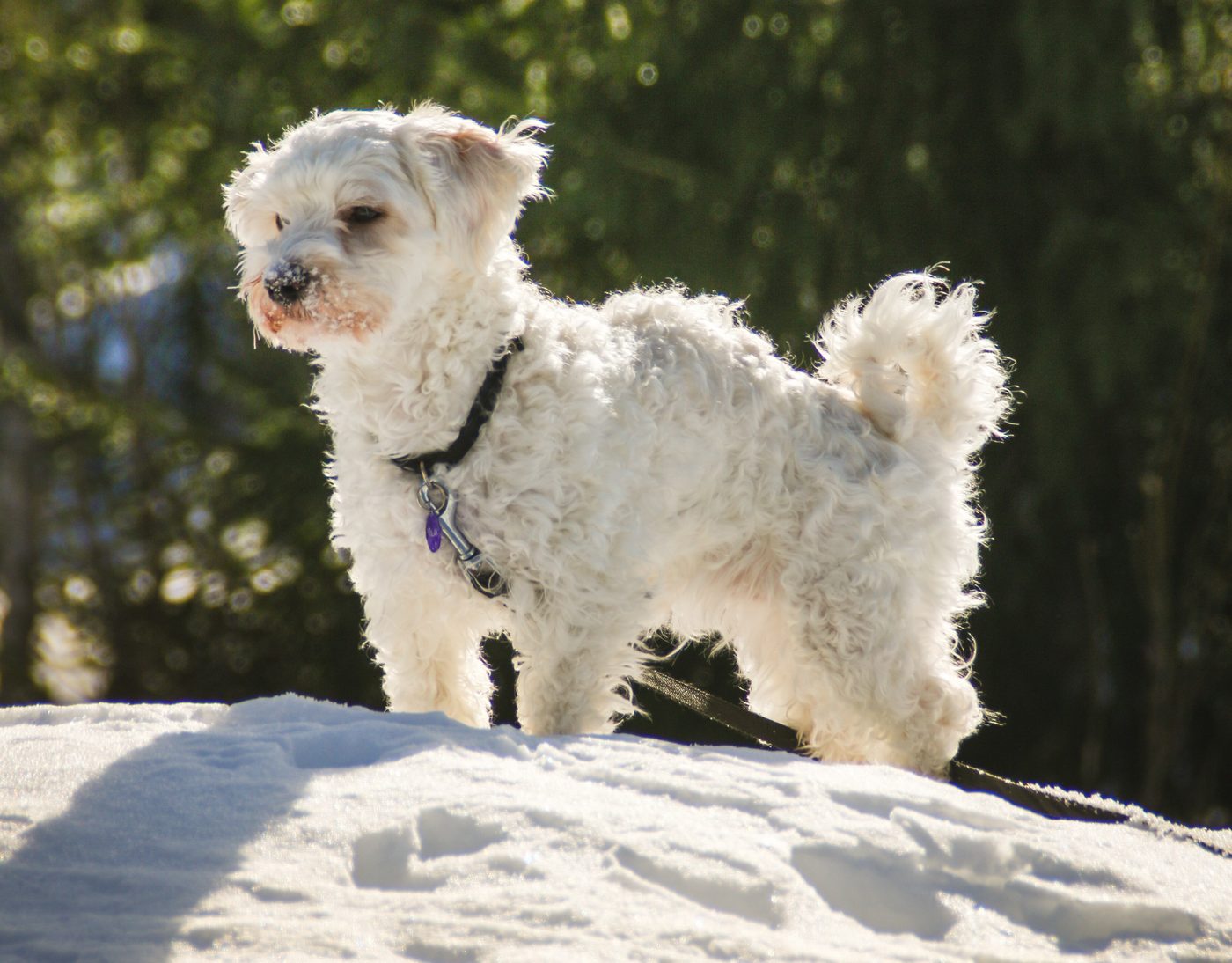
The Havanese is the native dog of Cuba, a small, sturdy member of the Bichon family with a long, soft, silky coat, drop ears and a plumed tail carried arched over its back. Its standard calls it a dog of 'immense charm' and asks for a friendly, playful, alert and intelligent companion with a sweet disposition. It moves with a distinctive springy gait that comes from its short upper arm and its playful, spirited personality.
History
The Havanese belongs to the Bichon family of small Mediterranean companion dogs. The FCI says the breed developed along the Spanish and Italian coasts and was probably brought to Cuba early on by Italian sea captains, and the AKC notes that the exact route is unknown. In Cuba the dogs became cherished pets of wealthy families. After the 1959 revolution, many Havanese were left behind, but a few families escaped with their dogs, and their descendants survived in the United States. In the 1970s Dorothy and Bert Goodale acquired six Havanese, and later five more from Ezekiel Barba, who had taken his dogs to Costa Rica, and built a breeding program from four bloodlines. Dorothy Goodale founded the Havanese Club of America in 1979. The AKC admitted the Havanese to its Miscellaneous class in 1996 and to the Toy Group in 1999.
Type
A small, sturdy, moderately boned dog, never coarse or fragile, slightly longer than tall. The AKC asks for an ideal height of 9 to 10½ in (23 to 27 cm), accepts 8½ to 11½ in (21.5 to 29 cm), and disqualifies dogs outside that range. The FCI sets 23 to 27 cm with a tolerance of 21 to 29 cm, and the Kennel Club an ideal of 23 to 28 cm. No standard sets a weight; the AKC breed profile gives 7 to 13 lb (3.2 to 5.9 kg).
The coat is long, abundant and wavy, silky to the touch and light in texture, standing slightly off the body but flowing with movement. The AKC also allows a corded coat, in which adult dogs are covered in tassel-like cords. Show dogs are presented naturally, with only the feet and hygiene areas trimmed. The AKC accepts all colors and markings as equal, the Kennel Club all colors except merle, and the FCI lists white (rarely pure), fawn, black, havana brown, tobacco and reddish brown, with patches and tan markings allowed.
Temperament
The AKC standard describes a friendly, playful, alert and intelligent dog with a sweet, non-quarrelsome disposition. The FCI calls it exceptionally bright, affectionate and happy, 'a charmer, playful and even a bit of a clown', and says it loves children and plays with them endlessly. The Kennel Club sums it up as lively, affectionate, intelligent, friendly and outgoing.
Energy
Moderate. The AKC says the Havanese has moderate exercise needs: a brisk daily walk or playtime with its owner, or even romping indoors, is enough. Never overexercise one; if it is panting and struggling to keep up, it is time to head home.
Intelligence
The FCI calls the Havanese exceptionally bright and easy to train, and the AKC describes it as highly intelligent and eager to please. It learns readily with positive methods, but it can be sensitive, so harsh scolding should be avoided. Early, gentle socialization is very important.
Intelligence here means typical trainability, guided by Stanley Coren's survey of obedience judges. It is not a verdict on any one dog.
Care
Grooming
The long, silky coat needs combing or gentle brushing every day to keep it free of mats, and many pet owners keep their Havanese in a short clip to save time. Bathe as needed, gently clean the corners of the eyes daily to prevent tear stains on light coats, and check and wipe the ears often.
Health notes
The AKC describes the Havanese as generally healthy and fairly long-lived, with a life expectancy of 14 to 16 years. Conditions it lists include eye disorders, chondrodysplasia, deafness, heart murmurs, Legg-Calvé-Perthes disease of the hip, and slipping kneecaps. For a CHIC number, the Orthopedic Foundation for Animals requires a hip evaluation (OFA or PennHIP), an ACVO eye exam, and a veterinary evaluation of patellar luxation, all registered with OFA. The Havanese Club of America recommends the eye exam every year, and in 2022 it dropped the BAER hearing test from its CHIC requirements. In the UK, the Kennel Club recommends eye testing and elbow scoring.
Ordinary care
Havanese are happiest with company, and the AKC notes that they don't like being left alone for hours. Keep training positive and gentle, socialize puppies early with calm, pleasant experiences, and keep up with daily coat care or a short trim. Ask breeders for the parents' hip, eye and kneecap results.
Facts
- The Havanese is the only dog breed native to Cuba, and the Kennel Club calls it Cuba's national dog.
- The modern revival began when Dorothy and Bert Goodale spotted a picture of two small white dogs on the cover of a Spanish magazine in their dentist's office in the 1970s. Their breeding program started with just eleven dogs.
- A Havanese coat can be corded, like a Puli's: the AKC standard says corded adults are 'completely covered with a full coat of tassel-like cords.'
- According to the FCI, the brown 'tobacco' color common in the breed gave rise to the mistaken legend that the Havanese originated in Havana.
- The Havanese's trademark springy gait comes from its short upper arm combined with strong drive from behind.
The Dog Codex is an editorial reference, not veterinary advice. Health notes summarize conditions that appear in breed literature; they do not diagnose an individual dog and do not replace examination by a licensed veterinarian.