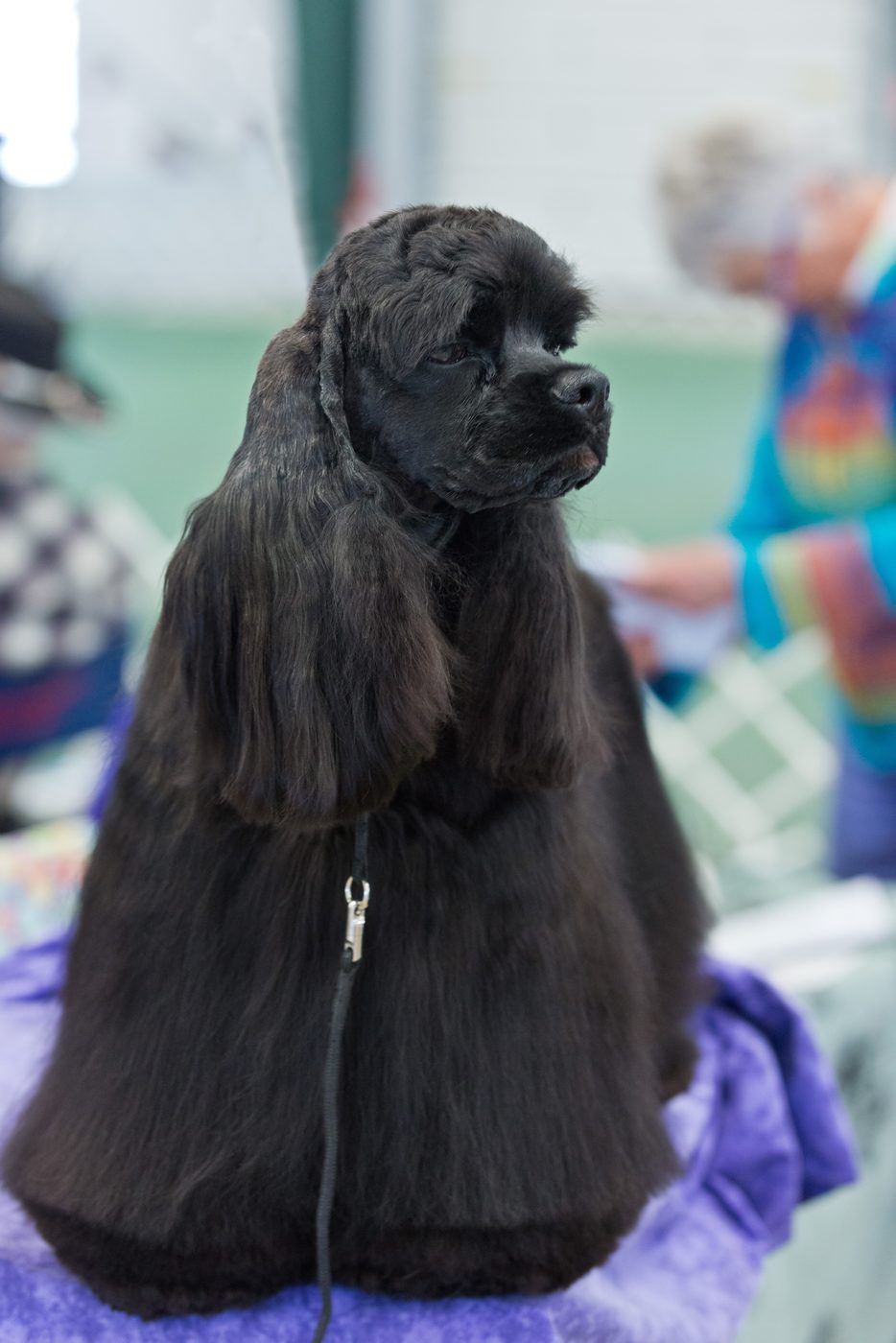
Sporting group · United States / United Kingdom
Cocker Spaniel
- SizeMedium
- Height34–39 cm
- Weight9–14 kg
- GroupSporting
- EnergyModerate
Photo: SheltieBoy, CC BY 2.0, via Wikimedia Commons

Overview
The Cocker Spaniel is the smallest AKC sporting dog, originally used to flush and retrieve woodcock. The American Cocker evolved a rounder head and more profuse coat than the English Cocker; both remain merry, compact gundogs that adapted readily to household life—provided the coat is maintained.
History
Spaniels were split by work long before they were split by registry: cockers for woodcock, springers for springing game. In the United States, a type with a shorter back and more dome developed from British imports in the late nineteenth century. The AKC separated American and English Cockers in 1946. The breed's popularity soared in mid-century America.
Type
AKC ideal: males 38 cm, females 35.5 cm, with a window of about 1.3 cm. Weight typically 10–14 kg. The English Cocker is taller and less coated.
Silky, flat or slightly wavy, of medium length, with heavy feathering on ears, chest, belly, and legs. All AKC colors are allowed, including black, ASCOB (any solid color other than black), and parti-color. The show coat is far more abundant than a working cocker's.
Temperament
Described for generations as 'merry.' Cockers are typically affectionate, eager to please, and sensitive. Poor breeding and isolation produced a mid-century reputation for sharp or shy dogs; well-bred, well-socialized Cockers are stable and cheerful. They can be vocal and may follow their noses into trouble.
Energy
Moderate to moderately high. They enjoy a brisk walk, a romp, and retrieving games, but they are not a pointer's mileage. Mental work and companionship matter as much as distance.
Intelligence
Eager and people-oriented, Cockers typically take to gundog and household training when work is kept upbeat and consistent.
Intelligence here means typical trainability, guided by Stanley Coren's survey of obedience judges. It is not a verdict on any one dog.
Care
Grooming
High maintenance if kept in full coat: several trims a year, regular bathing, and daily or near-daily combing to prevent mats behind the ears and in the trousers. Many companions are kept in a short 'puppy cut.' Drop ears need routine cleaning.
Health notes
Ear infections are common because of the long leather. Progressive retinal atrophy, cataracts, glaucoma, and cherry eye occur. Autoimmune disorders, hypothyroidism, and a predisposition to chronic skin disease appear in some lines. Hip dysplasia and patellar luxation are screened. Rage syndrome was reported historically in a minority of poorly bred dogs and is not typical of the modern well-bred Cocker.
Ordinary care
Do not neglect the ears after walks in wet grass. Provide puzzle feeding and short training sessions; the breed is food-motivated and thrives on praise. They generally want to live indoors as true house dogs. Regular dental care is important in this smaller sporting mouth.
Facts
- A Cocker Spaniel named Ch. My Own Brucie won Westminster in 1940 and 1941 and helped cement the breed's American fame.
- The name 'cocker' comes from woodcock, the small game the dogs were used to flush.
- Lady in Disney's Lady and the Tramp is an American Cocker Spaniel.
The Dog Codex is an editorial reference, not veterinary advice. Health notes summarize conditions that appear in breed literature; they do not diagnose an individual dog and do not replace examination by a licensed veterinarian.