Herding group · United Kingdom (Wales)
Pembroke Welsh Corgi
- SizeSmall
- Height25–30 cm (AKC/FCI)
- Weight9–12 kg (FCI)
- GroupHerding
- EnergyModerate
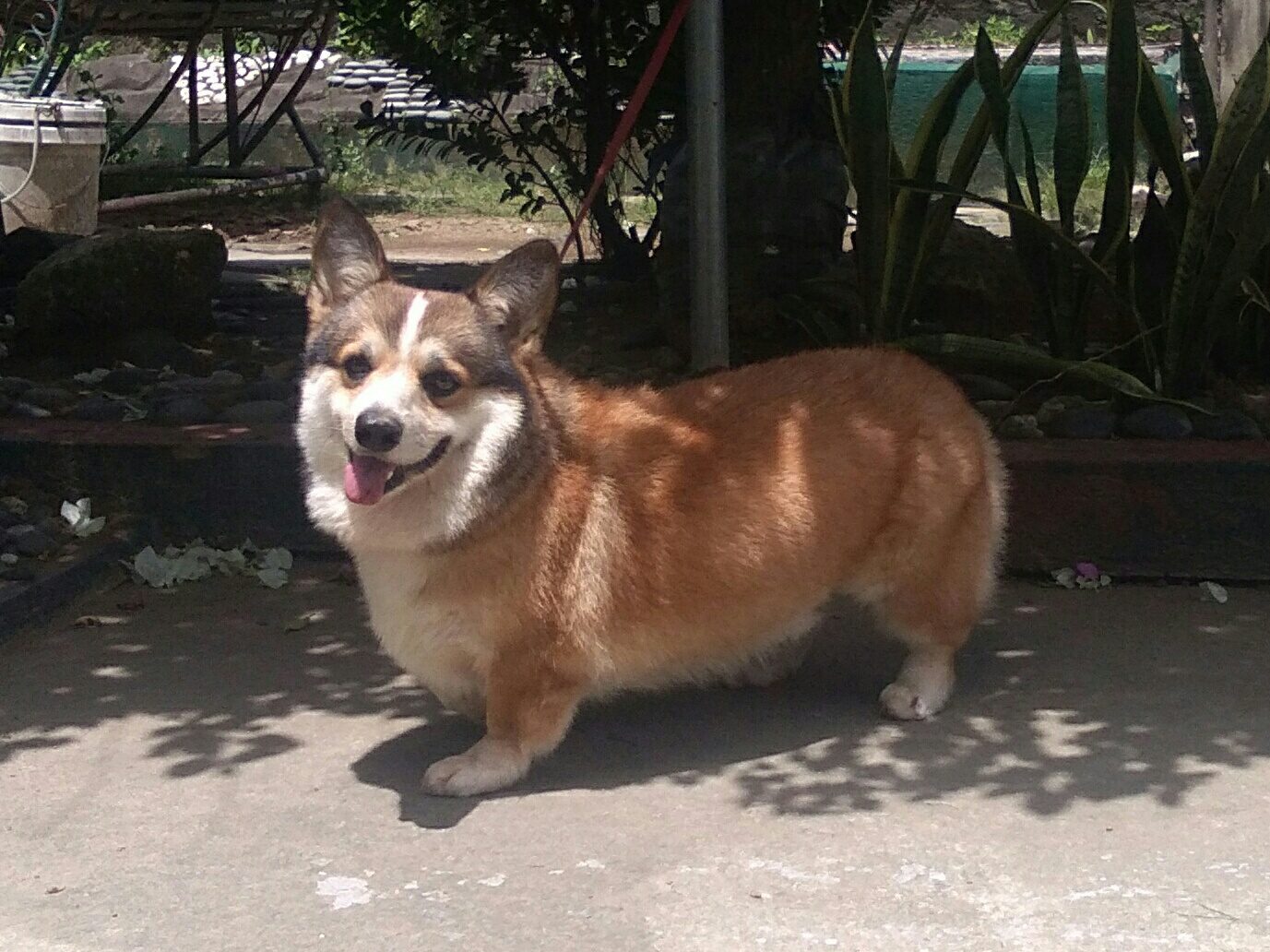
Photo: Dog breed facts, CC BY-SA 4.0, via Wikimedia Commons

Overview
The Pembroke Welsh Corgi is a small, low-set herding dog from southwest Wales, where it once drove cattle to common grazing and brought them home for milking. A member of the spitz family, it has a foxy head, upright ears and a short or naturally bobbed tail. Both standards describe a bold, outgoing and friendly dog, strong and active for its size, and the breed's long association with the British royal family has made it famous around the world.
History
Corgis may have worked Welsh farms since the tenth century, and in the 1850s, the AKC says, there was one on almost every farm in Wales. The spitz-type Pembroke, often born with a short tail, belonged to the south of the country, and the long-tailed Cardigan to the north. Their main job was moving and minding the small cattle of the Welsh hills, along with ratting and guarding. As farmers turned to fenced sheep pastures, longer-legged Border Collies took over and Corgis grew scarce on farms. The Kennel Club recognized Corgis in the 1920s, and for a time Pembrokes and Cardigans were interbred, until the club separated them in 1934. That same year the first Pembrokes reached the United States, and the AKC recognized the breed. Royal patronage, beginning with the family of the future King George VI in 1933 and continuing through Queen Elizabeth II, made the Pembroke the more popular of the two Corgis.
Type
Both standards describe a low-set, strong, sturdily built and active dog, giving an impression of substance and stamina in a small space. Height is 10 to 12 in (25 to 30 cm) in the AKC standard and about 25 to 30 cm in the FCI's. The FCI asks for males of 10 to 12 kg and females of 9 to 11 kg. The AKC caps weight at 30 lb (13.6 kg) for males and 28 lb (12.7 kg) for females and prefers about 27 lb (12.2 kg) and 25 lb (11.3 kg) in show condition. The body is moderately long and low, about 40 percent longer from withers to tail than it is tall.
The coat is of medium length, with a short, thick, weather-resistant undercoat under a coarser, longer outer coat and a slightly fuller ruff around the neck, chest and shoulders. Colors are red, sable, fawn, and black and tan, with or without white on the legs, chest, neck, muzzle, underparts and a narrow blaze. The AKC counts 'fluffies', dogs with a coat of extreme length and exaggerated feathering, as a very serious fault, along with mostly white 'whitelies' and smoky 'bluies'.
Temperament
The FCI describes the Pembroke as bold in outlook and workmanlike, outgoing and friendly, never nervous or aggressive; the AKC standard asks for an outlook that is bold but kindly, never shy or vicious. The AKC calls it affectionate and companionable without being needy, and notes that Pembrokes often have a mind of their own.
Energy
Moderate. Both standards call the Pembroke active, with stamina in a small space. The AKC describes a strong, athletic little herder that loves activity and is happiest with a job, and recommends moderate daily exercise; long walks and slow jogs suit it, but its short legs can't keep up with a bicycle. Many Pembrokes enjoy agility, herding, obedience and tracking.
Intelligence
The AKC calls Pembrokes energetic, willing and highly intelligent partners who respond well to training, and says positive, reward-based methods work best with this sensitive breed. Both standards ask for an intelligent, interested expression.
Intelligence here means typical trainability, guided by Stanley Coren's survey of obedience judges. It is not a verdict on any one dog.
Care
Grooming
The AKC notes that the Pembroke sheds a fair amount every day and more in late spring and early summer. A daily once-over with a comb and slicker brush keeps loose hair under control, and during the shed a bath followed by an undercoat rake helps clear the dead coat. The nails need regular trimming.
Health notes
The AKC calls the Pembroke typically healthy and gives a life expectancy of 12 to 13 years. For a CHIC number, the Orthopedic Foundation for Animals requires a hip evaluation (OFA or PennHIP) and an ACVO eye examination, both registered with OFA. The AKC adds that responsible breeders also screen for elbow dysplasia, heart problems, degenerative myelopathy and von Willebrand's disease, a bleeding disorder.
Ordinary care
Pembrokes need moderate daily exercise, a daily brush and early socialization; the AKC recommends puppy classes and gentle exposure to many people and places between 7 weeks and 4 months of age. In hot or cold weather, keep exercise moderate and offer plenty of fresh water. When choosing a puppy, ask for the parents' hip and eye results.
Facts
- Queen Elizabeth II's lifelong love of Pembrokes began with Susan, an 18th birthday present in 1944 who went on to found a royal line lasting 14 generations. The Queen owned more than 30 Corgis, and she still had two, Muick and Sandy, when she died in 2022.
- Where the word corgi comes from is debated. It is often explained as Welsh cor, 'dwarf', plus ci, 'dog', but some trace it to curgi, a Welsh word said to mean 'to watch over'.
- Welsh Corgis once escorted the family cows to common grazing land, watched over them all day, and made sure they were home in time for milking.
- Pembrokes and Cardigans were judged as one breed in Britain until 1934, when the Kennel Club separated them. You can tell them apart by the tail: the Cardigan has a long one, while the Pembroke was traditionally docked and is sometimes born with a natural bobtail.
- The first Pembrokes registered with the AKC were Little Madam and Captain William Lewis, imported in 1934 by Mrs. Lewis Roesler of Massachusetts. Little Madam became the breed's first American champion in 1935.
The Dog Codex is an editorial reference, not veterinary advice. Health notes summarize conditions that appear in breed literature; they do not diagnose an individual dog and do not replace examination by a licensed veterinarian.