Herding group · United States
Miniature American Shepherd
- SizeSmall
- Height33–46 cm (AKC)
- Weight~9–18 kg (AKC profile)
- GroupHerding
- EnergyHigh
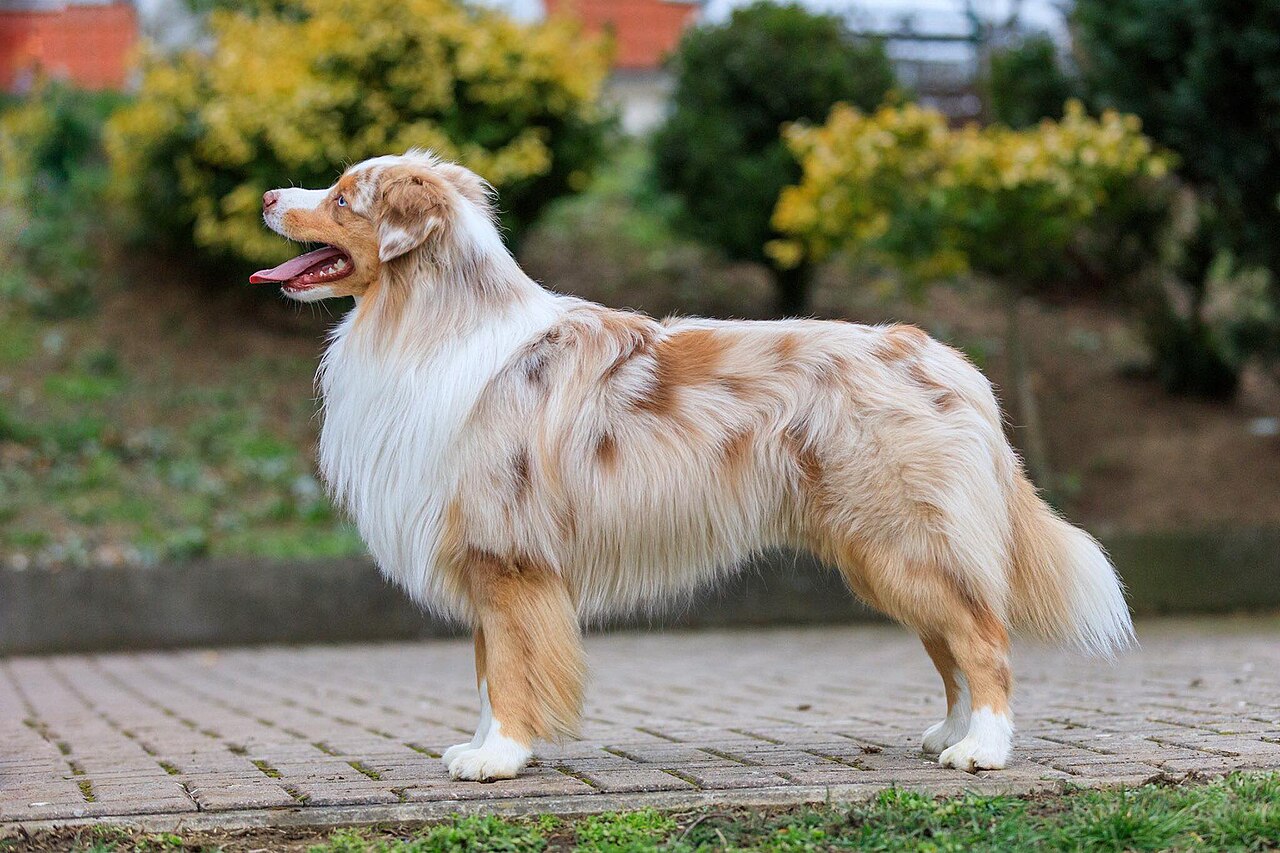
Photo: Jugabe3b (photo by Julia Bettendorf), CC BY-SA 4.0, via Wikimedia Commons

Overview
The Miniature American Shepherd is a small, agile herding dog from the United States that looks much like a scaled-down Australian Shepherd. Its standard describes a highly versatile, energetic athlete with 'superior intelligence and a willingness to please,' strong enough to work stock over varied terrain. It has a weather-resistant double coat of medium length in black, blue merle, red or red merle, and traditionally a docked or natural bobtail.
History
The breed began in California in the late 1960s, when breeders selected small dogs believed to be Australian Shepherds to keep their small size, active character and intelligence. The little dogs were popular with horse people, who could take them along to shows. They were first registered with the National Stock Dog Registry in 1980, originally as Miniature Australian Shepherds. The first parent club, MASCUSA, formed in 1990, and the breed entered the AKC Foundation Stock Service as the Miniature American Shepherd in May 2011. The AKC fully recognized it in 2015, the FCI accepted it provisionally in 2019, and the Royal Kennel Club in the UK recognized it on its Imported Breed Register from July 2026.
Type
A small, solidly built herding dog, slightly longer than tall, with moderate bone and depth and strength without bulk. The AKC sets 14 to 18 in (35.5 to 46 cm) for males and 13 to 17 in (33 to 43 cm) for females and disqualifies dogs outside those ranges. The FCI uses the same limits in centimeters, and the Kennel Club gives 35 to 46 cm and 33 to 43 cm. No standard sets a weight; the AKC breed profile gives 20 to 40 lb (about 9 to 18 kg).
The double coat is moderate in every way: medium in length and texture, straight to wavy and weather resistant, with an undercoat that varies with the climate. The hair is short and smooth on the head and the front of the legs, with moderate feathering on the backs of the forelegs and the breeches and a moderate mane, fuller in males. The recognized colors are black, blue merle, red (liver) and red merle, with or without white and tan markings; white is limited to set areas and must not dominate the head. Eyes may be brown, blue, hazel, amber or any combination.
Temperament
The standard describes an intelligent, primarily working dog with strong herding and guardian instincts, and an exceptional companion that is versatile, easily trained and enthusiastic about its work. It may be reserved with strangers but should never be shy. With its family it is protective, good natured, devoted and loyal, and as a worker it is resilient and persistent and adjusts its arousal to the task at hand.
Energy
High. The standard calls the Miniature American Shepherd a highly versatile, energetic dog with the agility, strength and stamina to work over varied terrain, and the Kennel Club recommends one to two hours of exercise a day. It enjoys outings that work both mind and body, and it excels at obedience, agility, tracking and herding.
Intelligence
The standard credits the breed with superior intelligence, a willingness to please and easy trainability. The AKC calls it highly trainable and recommends early socialization, puppy classes and at least basic obedience to help it reach its potential as a companion.
Intelligence here means typical trainability, guided by Stanley Coren's survey of obedience judges. It is not a verdict on any one dog.
Care
Grooming
Brush weekly, and daily during the shedding season, which may come once or twice a year; the AKC notes that the breed sheds a fair amount. Work out mats with a slicker brush or metal comb, and trim the nails regularly. For the show ring, the standard allows trimming only on the ears, feet, backs of the hocks, pasterns and tail, and prefers untrimmed whiskers.
Health notes
The AKC describes the Miniature American Shepherd as generally healthy, with a life expectancy of 12 to 13 years. For a CHIC number, the Orthopedic Foundation for Animals requires a hip evaluation (FCI, OFA or PennHIP), an ACVO eye examination registered with OFA, and DNA tests for progressive retinal atrophy (prcd-PRA), MDR1 multiple drug sensitivity, HSF4 hereditary cataracts (Australian Shepherd type) and neuroaxonal dystrophy (NAD). Optional CHIC tests are elbows, patellar luxation (minimum age 12 months), dentition, and DNA tests for collie eye anomaly, degenerative myelopathy, CDDY/CDPA, canine multifocal retinopathy (CMR1) and hyperuricosuria. The Miniature American Shepherd Club of the USA asks for the same required tests, with the eye exam repeated every year, and strongly urges breeders to do the optional ones too.
Ordinary care
Give the Miniature American Shepherd regular exercise and training that use both body and brain, and start socialization and puppy classes early. Brush weekly, more often when it sheds, and keep the nails short. Ask breeders for the parents' hip and eye results and the required DNA tests.
Facts
- The breed's story starts with an Australian Shepherd puppy named Puppy, bought at a rodeo in Torrance, California, in 1962. She grew to only 11 inches tall, and her small offspring started the line.
- Horse people helped the breed spread across the United States: the small dogs were easy to take along to horse shows, and their intelligence and loyalty made them ideal travel companions.
- A 13-inch dog named Cordova's Spike, bred from Puppy's line, was registered with the National Stock Dog Registry in 1980, and the breed was known as the Miniature Australian Shepherd for decades.
- The name Miniature American Shepherd was settled by a club membership vote. Many people still called the dogs Miniature Australian Shepherds, but the American name won out.
- When the AKC opened registration for the Miniature American Shepherd, hundreds of owners transferred their AKC Australian Shepherds into the new breed, according to its parent club.
The Dog Codex is an editorial reference, not veterinary advice. Health notes summarize conditions that appear in breed literature; they do not diagnose an individual dog and do not replace examination by a licensed veterinarian.