Non-Sporting group · Croatia / United Kingdom
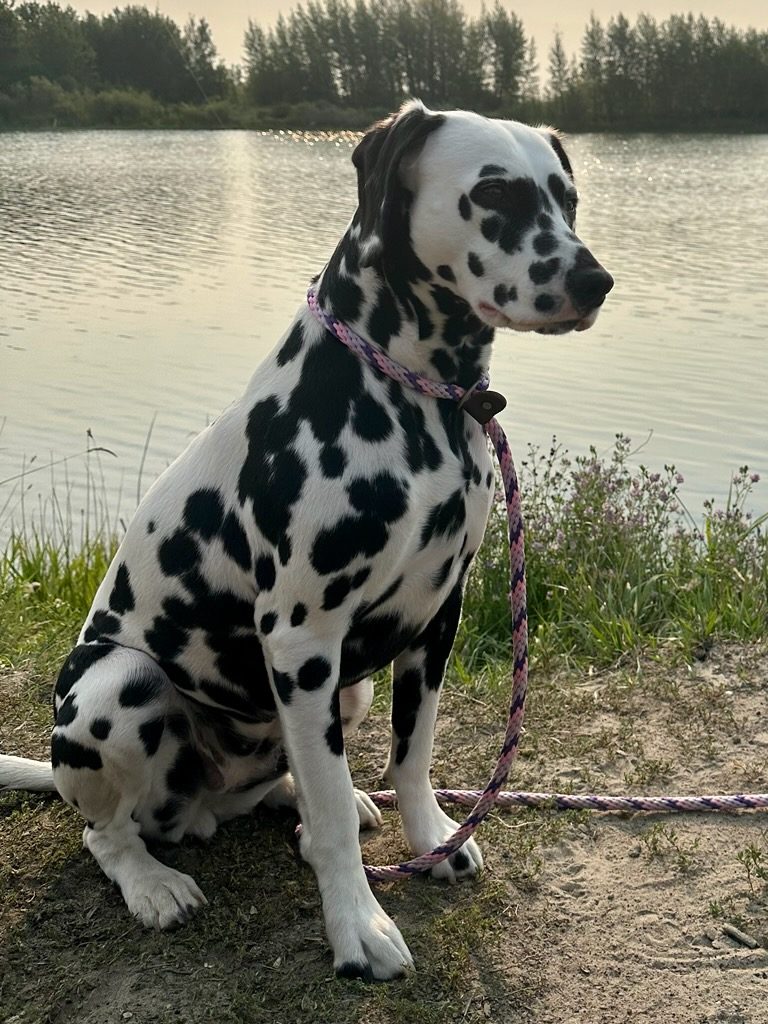
Dalmatian
- SizeLarge
- Height48–61 cm
- Weight20–32 kg
- GroupNon-Sporting
- EnergyHigh
Photo: Bradlien, CC BY-SA 4.0, via Wikimedia Commons

Overview
The Dalmatian is a spotted coaching dog, bred to trot beside horse-drawn carriages for miles, clear the road, and guard the horses at rest. Outgoing and durable, it is a running companion with a well-known urinary quirk and a history as a firehouse mascot.
History
Spotted dogs appear in European art for centuries; the breed's name points to Dalmatia on the Adriatic, though British fanciers of the nineteenth century standardized the coaching type. Dalmatians worked as stable guards and carriage escorts. The AKC recognized the breed in 1888. Fire departments later kept them as mascots because they were already at home with horses.
Type
Overall balance matters more than a single number; 48–61 cm is the usual window. They should be capable of a day's trot: lean, not heavy.
Short, dense, and sleek, pure white with round black or liver spots. Spots should be distinct, not roaned into ticking, though ticking appears. Puppies are born white; spots develop over the first weeks.
Temperament
Outgoing, sensitive, and typically people-oriented. Poorly socialized Dals can be shy or sharp. They often love children who play fairly and may herd or shoulder them. A strong recall is work; they were meant to range beside a carriage, not heel like a shepherd.
Energy
High. This is a trotting athlete. Daily runs or very long walks are appropriate for healthy adults. Puppies should not be road-run on hard surfaces. Without miles they become noisy and destructive.
Intelligence
Coach dogs with stamina and a capacity for formal work; Dalmatians learn well when exercise and training are both generous.
Intelligence here means typical trainability, guided by Stanley Coren's survey of obedience judges. It is not a verdict on any one dog.
Care
Grooming
Weekly brushing; they shed short white hairs with dedication. Bathe as needed. Check skin; some Dals are sensitive.
Health notes
A unique uric acid metabolism (hyperuricosuria) predisposes to urate stones; many dogs do well on appropriate diets and water intake, and a DNA test exists. Congenital deafness is associated with the extreme piebald pattern; BAER testing of puppies is standard among serious breeders. Hip dysplasia and skin allergies occur.
Ordinary care
Water always available; never restrict water as a housetraining trick. Ask breeders for BAER results. Plan an exercise life, not a weekend-warrior life. They often enjoy other dogs and horses.
Facts
- Dalmatian puppies are born pure white; spots appear after about a week.
- The firehouse association comes from the breed's work with horse-drawn fire apparatus.
- Disney's 101 Dalmatians drove boom-and-bust popularity that sent many Dals to shelters when the mileage requirement became clear.
The Dog Codex is an editorial reference, not veterinary advice. Health notes summarize conditions that appear in breed literature; they do not diagnose an individual dog and do not replace examination by a licensed veterinarian.