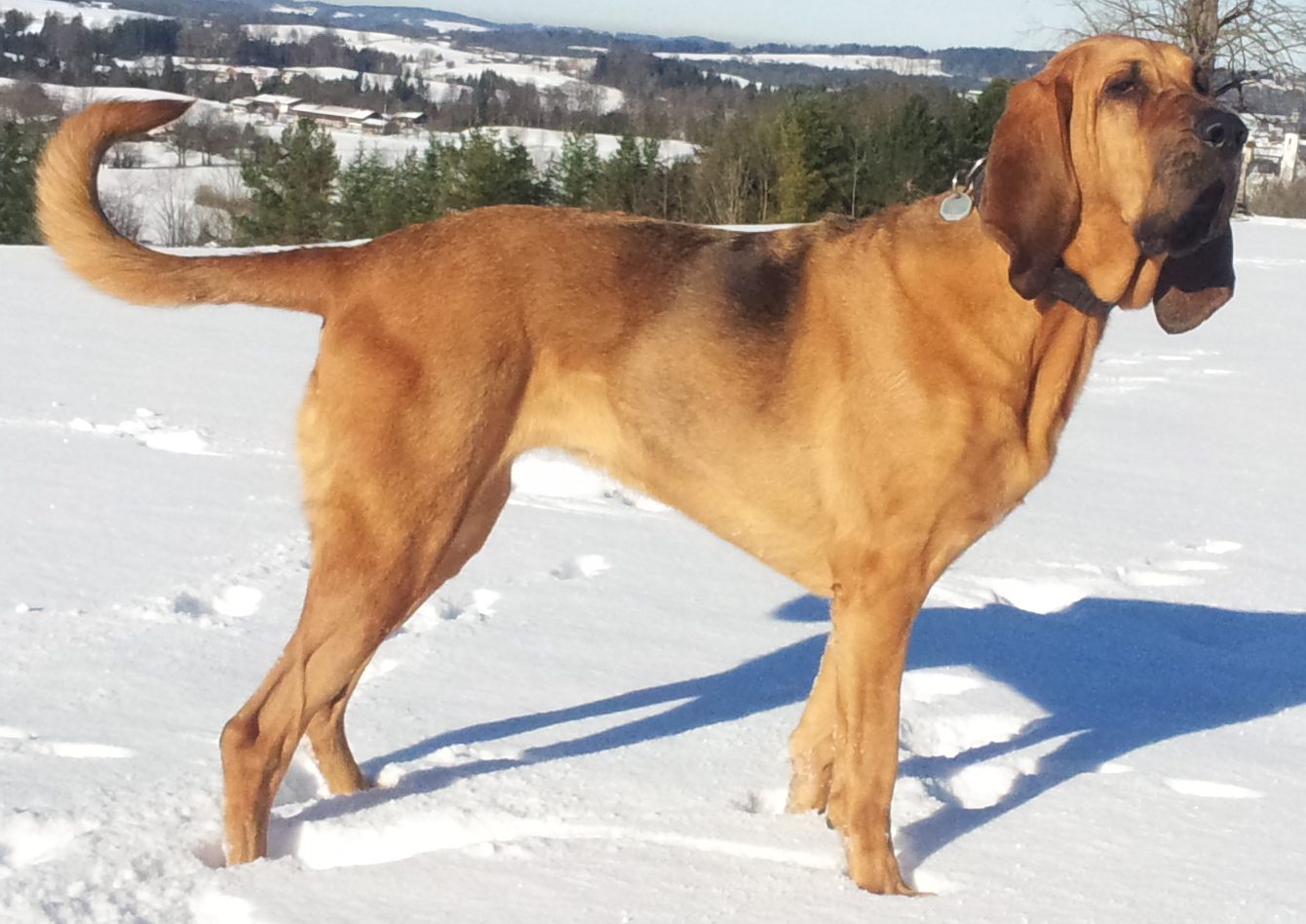
Hound group · Belgium / France / United Kingdom
Bloodhound
- SizeLarge
- Height58–69 cm
- Weight36–50 kg
- GroupHound
- EnergyModerate
Photo: Erland22, CC BY-SA 4.0, via Wikimedia Commons

Overview
The Bloodhound is the great trailing hound, with wrinkled skin, long leathers, and a nose so acute that its man-trailing work has been admitted in courts. It is a large, solemn, affectionate scent engine—not a jogging partner and not a watchdog in the usual sense.
History
Monks of the Abbey of Saint-Hubert in the Ardennes kept black-and-tan hounds from the Middle Ages; related dogs in Britain were called bloodhounds or sleuth hounds, meaning hounds of pure or noble blood. They were used to trail deer and later people. The modern type was refined in Britain and Belgium. The AKC registered the breed in 1885. Police and search services still maintain trailing lines.
Type
Males 64–69 cm and about 40–50 kg; females 58–64 cm and 36–45 kg. Heavy bone, abundant skin, and a long tail are part of the type. This is a large hound, not a mastiff.
Short, hard, and weather-resistant over an extraordinary amount of loose skin, especially on the head and neck. Colors: black and tan, liver and tan, and red. A small amount of white on chest, feet, and tail tip is allowed.
Temperament
Gentle, dignified, and famously stubborn on a scent. Bloodhounds are typically good with people and children who treat them respectfully; they are not sharp. When the nose goes down, the rest of the world can vanish. The voice is a deep bay. They drool. Prospective owners who object to slobber should choose another breed.
Energy
Moderate but purposeful. They were bred to trail for miles at a walk or slow trot, not to sprint. Daily walks on a harness are appropriate; off-leash is generally unwise. Young dogs can be boisterous and clumsy.
Intelligence
A specialist trailer, the Bloodhound works with remarkable scent focus and is not built as an eager obedience partner.
Intelligence here means typical trainability, guided by Stanley Coren's survey of obedience judges. It is not a verdict on any one dog.
Care
Grooming
Wipe facial wrinkles and lips daily to prevent fold dermatitis. Clean and dry the long ears. The coat itself needs little more than a weekly rubdown. Have towels ready; water bowls are a splash zone.
Health notes
Gastric dilatation-volvulus is a leading killer; many owners discuss gastropexy with their veterinarian. Eyelid problems (entropion, ectropion) follow the heavy skin. Hip and elbow dysplasia, ear infections, and skin-fold pyoderma are common. The breed's average lifespan is shorter than many large hounds, often around 7–10 years.
Ordinary care
Use a well-fitted harness rather than a collar for trailing stress. Elevate feeding if advised by a vet, and avoid vigorous exercise around meals. They need space to stretch and a family that finds the drool comic rather than tragic. Scent games honor what the dog is.
Facts
- A Bloodhound's trailing evidence has been accepted in courts in several countries because of the breed's documented reliability.
- The abundant wrinkles and long ears help trap scent particles around the nose as the dog works a track.
- The name does not mean they hunt blood; it refers to blooded, or pedigreed, hounds.
The Dog Codex is an editorial reference, not veterinary advice. Health notes summarize conditions that appear in breed literature; they do not diagnose an individual dog and do not replace examination by a licensed veterinarian.